%%USERNAME%%    %%ACCWORDS%% %%ONOFF%% |


 |   Vore, shrinking, giantesses...what's the draw? What one of "those people" has to say. |
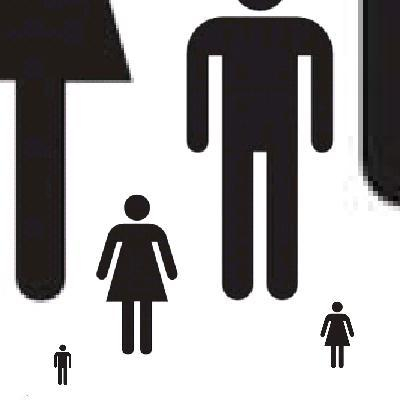 There is an attraction in the colossal, and a singular delight to which ordinary theories of art are scarcely applicable. Gustave Eiffel Introduction Good day, class. Thank you for settling down quickly. We have a lot to discuss, so let’s not waste any time. Welcome to Macrophilia 101. Yes, you in the front, what is your question? No, this is definitely not Macroeconomics; that’s down the hall. You don’t need to apologize; it was an honest mistake. Anybody else? No? Good. Now, as I was saying, this is Macrophilia 101, and I am your professor, St. Patrickraken  . Okay, now that we’ve gotten to know each other a little bit, I suppose I’ll make a confession: I’m not really a PhD. I don’t even have a graduate degree in psychology, or a graduate degree in anything, for that matter—I have a bachelor’s degree in economics—but if the comments of one professional psychologist are any indication, I don’t believe that a fancier piece of paper hanging on my wall would help me provide you any further insight into macrophilia. . Okay, now that we’ve gotten to know each other a little bit, I suppose I’ll make a confession: I’m not really a PhD. I don’t even have a graduate degree in psychology, or a graduate degree in anything, for that matter—I have a bachelor’s degree in economics—but if the comments of one professional psychologist are any indication, I don’t believe that a fancier piece of paper hanging on my wall would help me provide you any further insight into macrophilia.While I can see most in the audience are gentlemen, you ladies are always a welcome sight here, even though I would prefer not to see you sitting in this classroom at all. No, I don’t say that because I think women are intellectually inferior to men and you don’t belong in college. In fact, I wish you gals were so physically superior to us that you had to take this class online because you’re too tall to fit through the doorway of this building. I’m sure at least some of you unfamiliar with macrophilia are asking why I desire such a seemingly odd thing, and answering that question—explaining why there is an attraction in the colossal, as Gustave Eiffel’s quote on the chalkboard states, as well as the related attraction to the anti-colossal, focusing especially on people of such magnitudes—is part of what I hope to do today. So, without further ado, let’s begin. Now, while those of you remaining here may have signed up for this class, let’s make sure you really know what you signed up for. This is a sexual education course, but it isn’t the stuff your mommy and daddy learned in elementary school. All of you saw the GC rating signifying graphic content when you enrolled, so I’m assuming you know we’re into much more advanced subjects than what penises and vaginas are. If those words still make you giggle, then consider taking Macroeconomics like your colleague who just left our company. Remember, I’m an economics major, so I can appreciate enthusiasm for that subject; I won’t be offended by your departure. My intended audience is macrophiles, as well as curious and open-minded non-macrophiles, the latter group probably consisting mostly of Writing.Com members who’ve noticed the peculiar proliferation of Interactive Stories on this site that feature themes like shrinking, giantesses, and “vore.” If you’ve never heard of that last one, you can probably figure out what it’s all about just by thinking of some words in which that sequence of letters appears. In general terms, sexual selection favors those animals who can best arouse the senses of a potential mate, but the methods each species uses to accomplish that feat vary tremendously. Humans are very visual creatures, so eye-catching features are usually the most apparent to us, like the tail of a peacock, the rack of a buck, or the “rack” of a woman. Of course, only the sight of the last item on that list provides sexual excitement for humans, and mostly just the half of the human population without one on their own bodies. Our minds have evolved to usually distinguish men from women quite easily, and most of us enjoy getting closer to people of one sex—usually the opposite sex—much more than the other, but when you look more objectively, the physical differences between attractive men and attractive women are incredibly slight. Sure, we have different equipment between our thighs, but it’s not like that’s very apparent when we’re clothed in a public setting. Women will often have long hair atop their heads, while men’s hair will usually be short, but that’s a cultural style phenomenon, not promoted or limited by biology. Hair coverage on our faces and elsewhere differs between the sexes, though this natural difference is pronounced by shaving practices. The starkest difference between the sexes that’s readily visible is females generally possessing a softer, more prominent chest. With the exception of our genitals and reproductive organs, our bodies largely have the same parts and differ mostly in subtle ways, like ladies having a more delicate facial structure or wider hips—and even when it comes to our chests, men technically have breast tissue and will on rare occasions develop breast cancer, or even gynecomastia, an enlargement of the breast tissue that makes a male appear to have breasts. Focusing on members of a single sex, the difference between “attractive” and “plain” often amounts to nothing more than a minor difference in the proportion of facial features or body parts to one another, and opinions can differ widely on the relative attractiveness of members of a group. Obviously, a sexually reproducing species needs most of its males and females to find some members of the opposite sex attractive in order for them to want to mate and reproduce, but beyond that, what determines what draws us to someone? If you asked a heterosexual man why he is enamored with women’s chests, he would probably supply an answer along the lines of it being “normal.” And while that may be true, the response doesn’t explain why it has become such a common attractor for men, as much as the same answer fails to shed light on why peahens swoon over the colorful plumage of their males. While women are thought to have evolved pronounced breasts to compensate for humans’ flat faces—babies would have trouble getting their mouths to a nipple right against the mother’s body—breast size doesn’t affect milk production, so all else equal, it’s not as if a woman with small breasts is going to get sucked dry and be unable to feed her children while a woman with large breasts will not. If anything, it seems like breasts that are larger than absolutely necessary would have been disadvantageous to survival, especially in the days before sports bras, when they would have bounced and swung wildly, decreasing a woman’s agility as she tried to flee from predators. However, that may be the whole idea, because the best explanation I’ve seen provided for excessive bodily ornamentation is called the handicap principle, which suggests that what peacocks, women, and other beings visually imply with their larger-than-necessary attachments is, “You can see how my body has been cursed to put so much energy into maintaining all this superfluous weight, yet I’m still alive, so I must be strong. I mean, just imagine what a superior mate I would make if I didn’t have all this nonsense to worry about!” The point I’m trying to illustrate is that even the most typical sexual attraction has little to do with logic. We don’t consciously reason why our gaze keeps wandering back to one particular person in a crowded room. We may be able to offer general statements, like that person having a beautiful smile or nice eyes, but the same could probably be said of many other people nearby. There’s just…something about her, or him. Why should macrophiles need to support their attractions more than anyone else? There was a time when I didn’t think in these terms and felt as if I needed to justify macrophilia to the world, but this essay was written after that point. My main aim here is to let other macrophiles know that while they may not be “normal,” which is perfectly okay, they’re not alone in their seemingly bizarre thoughts and fascinations, which can be an awful feeling. That’s not to say I don’t try to provide some answers to the mysteries of macrophilia, particularly for the benefit of those who don’t possess this proclivity, because I think explanations exist, but I hope to spark at least as many questions to get other macrophiles thinking more about these issues so they may better understand themselves, even if they can’t get “outsiders” to understand—or don’t care to. I plan to begin by pulling out my personal “macro file,” so to speak, and relating my own story of self-discovery—which, I should point out, is a story still being written. I don’t completely understand why I feel the way I do, let alone why others feel the way they do, and probably never will, so the ideas I share here are subject to constant development as I learn more. Because the majority of prominent macrophiles are heterosexual males primarily interested in seeing huge women, often causing macrophilia and “giantess fetish” to be treated synonymously, I feel this particularly prevalent manifestation of macrophilia deserves some attention before I expand my focus to possibilities for why this attraction to major differences in size ultimately transcends major differences like sex, gender orientation, culture, and more. After all, I’ve spoken to macrophiles who are men and women, gay and straight, and hail from across America and such other varied places around the world as Brazil, Italy, and Iran. Somehow, so many diverse individuals who share this obscure interest manage to find each other, usually not knowing others like them exist until they take the initiative to begin searching the Internet. At that point, we discover that it’s a small—and big—world after all. A Fantastic Voyage Dr. Helen Friedman, a clinical psychologist in St. Louis, reached the following conclusion about macrophiles: They're playing out some old, unresolved psychological issue. Maybe as a child they felt overwhelmed by a dominant mother, or a sadistic mother. Maybe they were abused. This [macrophilia] is not so much a fetish as a disassociation from reality. It's part of an internal world. Healthy sexuality is about personal intimacy. It's about feeling good about yourself in a way that expresses caring, and feeling a connection to another person. You’d think a shrink would understand a fascination with shrinking a bit better than this. But seriously, is this Freudian nonsense the best a professional psychologist can do? To be fair, she probably didn’t look into the issue beyond the problems of a few patients, which is an extremely unrepresentative sample of all macrophiles, and had no reason to do so. I won’t deny that those patients couldn’t have had genuine issues, either. But I also wouldn’t say that anyone who plays video games has a disorder because, for a very small portion of gamers, the activity has become an all-consuming obsession that has distorted their perception of “real life,” hampering their ability to perform their jobs or ruining their social relationships. Any interest a person could possibly have is unhealthy if taken to such extremes. But most macrophiles, in my experience, are like most people in general: fully functioning members of society. If you’re not a macrophile, chances are that one has waited on you in a restaurant, assisted you in a store, or answered the phone when you called a helpline, and you had no idea of their quirk—and it’s not like macrophiles have a sixth sense for identifying their fellow size enthusiasts walking down the street either. Speaking of walking, we come from all walks of life: while I may not really be a college professor, I've seen at least one macrophile who is. I am fortunate to have experienced a perfectly healthy childhood absent of significant drama at home, raised by both parents in an urban, middle-class family. Ever since the birth of my older brother, who was my sole sibling, only my father held a full-time job, but my mother didn’t hide in the house all day; she was active in the community: helping at my schools, serving as an election judge, and taking part in many other volunteer activities. Despite her role as a homemaker, I never got any sense of gender stereotypes being thrust upon her. For example, she was just as handy with tools, if not more so, than my father. Neither parent acted in a visibly dominant or submissive manner. I didn’t even have an older sister casting me into shadow, or any other strong influence from another female relative, so I feel that family dynamics were a complete non-factor in the development of my macrophilia. Sorry to disappoint you, Dr. Friedman. Many macrophiles discover at a young age that they’re a bit different, though, and the initial fascinations can often be non-sexual in nature. I was barely into elementary school before I noticed that I seemed inordinately intrigued by gigantic beings that I would see on television, film, or elsewhere. One of my very first memories of this was the movie King Kong. Also, like many boys, I was (and still am) mesmerized by dinosaurs, being completely awestruck by the power of these grand, majestic juggernauts. Eventually, however, the creatures known as girls start to interest boys more than overgrown simians and lizards. I’ve always been somewhat mature for my age, so even during the period in which cooties are the most contagious, I had thoughts of the fairer sex on my mind, experiencing my first kiss on the lips in second grade. I was generally the tallest boy in my classes during elementary school, but at this point, the average girl stood taller than the average boy, so there were often two or three females in each grade who rose above me. Once again, I found their height strangely alluring. Contrary to what you might be thinking, the first girl I kissed was not among my vertical superiors; in fact, she was one of my smallest classmates. We remain close friends to this day—she is one of the few people who knows me in person yet is aware of my macrophilia—and I remain head and shoulders above her in terms of height. It was in the winter of my seventh-grade year—February of 1996, when I was twelve years old—that the real breakthrough came: the Gulliver’s Travels miniseries on NBC. During the first part of the story, Gulliver found himself washed ashore in Lilliput, which was inhabited by people who looked no different from those in England, aside from the fact that they were only several inches tall. I enjoyed this chapter in his saga, but the best was yet to come. When he arrived in the land of Brobdingnag, the tables turned. An enormous farmer finds Gulliver in a field where the wheat soars overhead like trees in a forest, and he brings him back to a house where the rest of the family were, not surprisingly, to the farmer’s scale: a wife who could have stuffed Gulliver in her cleavage, a dog that could have made a chew toy out of him, and, best of all to my pubescent mind, a daughter named Glumdalclitch, who was only eleven years old but towered dozens of feet above my middle school classmates and, in her own words, was still “growing very fast.” I would have found the young actress attractive regardless of her height; however, since she had been transformed into a titan through the magic of television, she downright mesmerized me. Whenever she was on the screen—particularly at the same time as Gulliver, when I could directly see just how much she dwarfed him and imagine how much she would have dwarfed me had I been standing in his place—I couldn’t take my eyes off her. The voyage to Brobdingnag only accounted for a quarter of the length of Gulliver’s Travels, so I was pried away from Glum’s grasp all too soon. I wanted to see more of her, though, so I went to search the Internet, whose mainstream use was a pretty recent phenomenon at that point in time. Still, it was not long before I discovered her identity and found pictures from her role in Gulliver’s Travels. Whenever my parents weren’t home, I would go online and peruse the gallery of stills. There was nothing pornographic about the pictures; since they were from the show, they were completely wholesome. I still felt embarrassed about my desires, however, so I wanted to keep them as closely guarded as possible; thus, I learned very quickly how to erase my tracks on the Internet. Soon, seeing Glum alone was not enough. I wanted to see more girls like her, so I attempted to probe into the deepest recesses of the Internet, trying to find other pictures of young women of spectacular size. After many hard hours of searching, I eventually came upon the key word: giantess, sometimes abbreviated as GTS. Although the word “giant,” even as a noun, can be used to describe much more than giant people, the word “giantess” refers specifically to a lady of gargantuan proportions. After noticing many sites devoted specifically to this subject, I started to recognize that I was not alone in my enthrallment with them. This notion was confirmed when, one day, I stumbled upon the term for a person like me: macrophile. It was disarmingly simple, yet until one finds this word, one would never expect his or her thoughts to be shared by so many others as to merit a term to describe them. “Macro” means large and “phile” means lover; therefore, macrophiles are lovers of largeness. This doesn’t refer to girth, as macrophiles often gravitate toward thin and/or athletic body types; it’s the height of at least one of the parties involved that is out of proportion with his or her environment. There are elements of the macrophile community that focus on heavier figures, but that is a separate interest. So, while a macrophile’s ideal giants could weigh thousands of times more than other people, it is because there are magnitudes of difference in height, not because their bodies look much different in the proportional sense. A macrophile enjoys the thought of being the smaller party in this situation, and a microphile, conversely, would fantasize about being on the larger end of the spectrum, but “macrophilia” is often used to encompass both tastes—especially since many of us appreciate being in both positions, even if we prefer one to the other—whereas the same is generally not the case with “microphile,” in the same way that the word “giant” is gender neutral but “giantess” is not. Earth has no giants—or at least no person who would satisfy the definition of a giant for the purposes of macrophilia. While I love to see real women taller than I am, true macrophilia hinges on being at the absolute whim and mercy of the larger party, requiring the size disparity to be more than a couple inches, even more than a foot or two, and no woman who has ever lived has been that much taller than I am. The most popular relative scale, in my experience, is one that makes the smaller people handheld; that is, the giants can fit the lower body and most of the torso of the comparatively tiny people in one of their fists, usually meaning that the giants are between about 50 and 150 feet tall or, if they’re typical human size, the smaller individuals are several inches in height, though people can still be picked up in one hand when there is less of a disparity than that. I started visiting various macrophile sites and forums, where people would post, shall we say, visual stimuli. Some of the content was hand drawn, but much of it was photographic. Hundred-foot-tall humans don’t exist, as I just pointed out—not that I needed to—so how is that accomplished? Simple cropping can only go so far. If my 5’4” wife, whom I’ll hereafter refer to by the pseudonym “Jane,” stood on a platform eight inches off the ground, allowing her to see eye-to-eye with my 6’0” frame, and someone took a picture of us from our chests up, anyone who doesn’t know us may be fooled into thinking that we’re the same height; but obviously, if Jane stood on a platform almost six feet high and you took a picture from her ankles up, cutting off everything besides my head next to her feet, I don’t think anyone would be convinced that she’s a dozen times as tall. However, there are a few ways for an unaltered picture to offer an illusion of a such a height difference. The simplest is point of view (POV), in which the angle of the shot and the position from which it’s taken create the illusion that the subject is many times taller. It’s like the view you’d have lying flat on your back, except if you glimpse such a picture when you’re not lying on your back, you feel as if you’re craning your neck to look up. The television series Land of the Giants used this method quite often, with the camera usually filming the “Giant” characters from around their feet, as “Little People”—that means people our size, I should clarify—would view them while scurrying across the ground, but also sometimes filming our fellow Littles from many feet above, giving us a “Giant’s-eye view.” Since our two races were physically indistinguishable but for the difference in scale—demonstrated by the fact that when some of the Earthlings temporarily grew in a few episodes, the average Giant passing by on the street didn’t recognize them as aliens—a simple camera angle let us know at a glance who towered and who cowered without the special effects expense of constant direct comparisons. Another trick is forced perspective, which involves playing with depth perception. For example, we’ve all seen pictures of tourists who appear to be holding up the Leaning Tower of Pisa. We know, of course, that these are not really giants in our midst but normal-sized humans taking advantage of the fact that objects appear smaller the farther away they are. An ad campaign for the Jeep Patriot, however, gave some people the power to make this illusion of a size difference into reality. In one of the spots, a woman is camping with some men who decide to sneak out of the tent and take an early morning canoe trip without her. She wakes up and drives after them, eventually stopping at a place where there is a wolf on the opposite side of the river. At that distance, the wolf seems smaller than her hand, and likewise, to the wolf, she would appear bite size. However, when the woman closes one eye, hindering her depth perception, and then brings her fingers to the wolf, it’s as if the wolf is right in front of her, because she’s able to pluck it up between her thumb and forefinger like it’s a mouse. One can only imagine what the animal sees as its view instantly changes from surveying the river from atop a rocky cliff to writhing helplessly between this young woman’s digits in front of her suddenly massive face. The canine’s wild ride ends, however, when she sets it in the boys’ canoe at its normal size, prompting them to abandon ship. Personally, I wonder why she didn’t leave that poor, innocent wolf out of her plan for revenge and just lift the canoe itself from the waters, carrying the vessel and its two stupefied sailors back to her voluminous vehicle, where they would attest to its roominess from their perch in the cup holders next to her leg. Point of view and forced perspective have their limits, however, so it’s most common and satisfying to visually indulge macrophilic urges through the aforementioned drawings, computer graphics, or combining elements from different photos to create artificial collages. As I spent some time viewing macrophile multimedia, I noticed a few patterns emerge among the members of the community, or at least among those who made posts: most were male, most fantasized about larger women, and many liked to imagine scenarios that involved violence and/or domination. So, a common theme was for a giantess to be portrayed as a goddess to be unswervingly worshipped by male followers, who would be subject to her wrath if they wavered in their undying devotion, and often even when they didn’t. I got some sexual excitement out of these depictions, but…was that all there was to my attractions, to see women using their newfound authority to abuse men? I felt like the appeal ran deeper than that. I thought reading some stories would shed some light on the subject better than any picture could, but I didn’t initially have much luck in that endeavor either, mainly finding stories of women lording their power over men right from the moment some of the former grew or some of the latter shrank, without any apparent reason, other than that they could. Unsatisfied with the material I had found, I dipped my pan even deeper into the Internet’s stream of information, attempting to discover some gold. For some time, my prospecting was in vain, but I eventually found something that caught my attention: drawings of giant, bipedal, non-human females. I’m not talking about apes, either; I’m talking about felines, canines, equines, lagomorphs, lizards, and more. What I found really shocking, however, was the fact that I became just as aroused as if I had been surveying a human giantess…possibly more. This find was not an isolated incident, for I would eventually come across a multitude of such sites, but the first and foremost belonged to Ken “Cougar” Sample. I believe the credit goes to him for manifesting a desire that, unlike my macrophilia, had been locked away in the subconscious vault of my mind. Not only was I a macrophile, who was positively beguiled at the sight of a human giantess, but I was attracted to “macrofurries”—animal-like giant people—as well. Despite the hairiness implied by that word, macrofurries can be leathery like reptiles, feathery like birds, and more, but people resembling mammalian beings like cats, dogs, and foxes are the most popular. “Anthro” is the word commonly used to refer to human-animal hybrids, and I believe “anthropomorphic macrophile” would be the proper term to describe me, but I like to call myself a “macrofurl.” Although I was enchanted by human-sized anthros, it turns out that anthrophilia and macrophilia go together like Canadian bacon and pineapple on a pizza—which means they do go together, to resolve any confusion—so when those two attractions of mine were triggered simultaneously, I became utterly hypnotized. I still couldn’t figure out why, though, and I felt an increasing need to demonstrate to myself that there was something more to these feelings…that they were more than just some eccentricity of which I should be ashamed. I wanted to see a story that interested me on a macrophilic level yet would simultaneously appeal to a non-macrophile, and if I couldn’t find one to read, then I would have to find one to write. Thus, what would end up becoming my novel Quorilax  was born. Judging by the overwhelmingly positive feedback I’ve received on it from macrophiles and non-macrophiles alike, I succeeded beyond my wildest expectations. This tale, inspired by my macrophilia, had enamored people with no idea that such an attraction even existed, and through that realization I gained a great deal of confidence and summoned the courage to write this essay. The only examination of macrophilia to precede mine, as far as I know, was the “Introduction to Macrophilia” at the site Lava Dome Five, which, although it contains some good observations, has a very clinical, detached voice, whereas I planned for mine to come from a far more personal point of view, so I felt like I was venturing into somewhat uncharted territory. In the process of penning Quorilax, I learned a lot about myself; in fact, this essay covers much the same ideas as the story, albeit in a less subtle and probably less entertaining manner. I don’t link here from there, since I’m content to let people enjoy the story without sharing the gritty details of what motivated me to write it if they’re not looking for that information, just as I wouldn’t start discussing even mainstream sexual interests without some provocation. Judging by the fact that you’re still reading this, you must possess some sort of interest in the subject. was born. Judging by the overwhelmingly positive feedback I’ve received on it from macrophiles and non-macrophiles alike, I succeeded beyond my wildest expectations. This tale, inspired by my macrophilia, had enamored people with no idea that such an attraction even existed, and through that realization I gained a great deal of confidence and summoned the courage to write this essay. The only examination of macrophilia to precede mine, as far as I know, was the “Introduction to Macrophilia” at the site Lava Dome Five, which, although it contains some good observations, has a very clinical, detached voice, whereas I planned for mine to come from a far more personal point of view, so I felt like I was venturing into somewhat uncharted territory. In the process of penning Quorilax, I learned a lot about myself; in fact, this essay covers much the same ideas as the story, albeit in a less subtle and probably less entertaining manner. I don’t link here from there, since I’m content to let people enjoy the story without sharing the gritty details of what motivated me to write it if they’re not looking for that information, just as I wouldn’t start discussing even mainstream sexual interests without some provocation. Judging by the fact that you’re still reading this, you must possess some sort of interest in the subject.After I started writing Quorilax, I discovered stories written by a couple of macrofurls who go by the monikers Arilin and Rogue . Along with Cougar and some others, their pages are hosted by Macrophile.Com. As you might have figured, there is a Macrophile.Com, although its focus probably isn’t what you would expect. It is one of the major hub sites for those interested specifically in macrofurries, which perhaps lends credence to a claim I once saw, that Rogue is the one who originally coined the term macrophilia to describe what I’ve dubbed macrofurlia. While a number of Arilin’s and Rogue’s stories may not appeal to anyone outside the macrophile community in the way of their subject matter, their writing is of extremely high quality, with clever dialogue and developed characters, and seeing this encouraged me. Of course, for a number of the plots, it made a difference that the giants were furries. After all, it’s hard for me to believe that any human who suddenly grew would immediately and without cause start to terrorize his or her classmates, coworkers, and others he or she had once treated as equals, but if two boys of a naturally gigantic race stumbled upon a human city, as they do in Rogue’s “Bunnies at Play,” it’s not quite as difficult to imagine them flattening people and cars under their skateboard wheels as they roll down our city streets, knocking down our buildings and lining their pockets with living samples of our species to bring back home and frighten their sisters. Well, I should say it’s not so hard to imagine this scenario when we’re not referred to as humans but as “crawlies,” and our grand structures and complex society are viewed much the same way by these immense invaders as a couple of young human boys might view an ant colony, with anthills as something unimpressive to be kicked down and the puny pests to be exterminated casually, even merrily, as they spill out of their destroyed home. Perspective is key here, and that is one of the major themes throughout this essay. Not all of Arilin’s and Rogue’s stories center on interspecies violence, though; in fact, some of them feature a romantic relationship between a macrofurry and a human, much as Quorilax does. If people of different sizes and different species can fall in love, or at least get along, then what seemed to be stopping humans of different scales from doing the same with each other? I probably just wasn’t looking in the right place for these stories at first, because in the time since I wrote Quorilax, I’ve found many stories not involving anthro characters that fit this description. I clearly have some preferences as a macrophile, and it’s those preferences upon which I feel I can comment most effectively, but I’ve also put thought into the connection between the many idiosyncrasies I’ve encountered in myself and others and how they all ultimately manifest themselves as a fascination with size disparities, from those of us who like to see giants crushing their physical inferiors without remorse, to those of us who like to see giants with a crush on their smaller counterparts, and everything in between. Before I speak in these more general terms, though, I think it’s worth examining what’s perhaps the most frequent tendency among macrophiles: an attraction to giant women. It’s a Woman’s World If you’re a macrophile, chances are high that your preferred giant is female, and in that case, you’re most likely male. But, you could also be a lady who enjoys the thought of being that giantess. And even a number of women who don’t picture themselves as the larger of two parties prefer to imagine a fellow female as the one dwarfing them. Dr. Friedman likely noticed this lopsided ratio, as she specifically postulates the existence of an abusive, sadistic mother in a macrophile’s childhood, but another possibility for why the doctor didn’t include a father in her theory is because such parenting, or maybe I should say lack thereof, is far more common among men. Ironically, by Ms. Friedman’s logic, that means we should see a macrophile community dominated by fans of gigantic gentlemen, not the other way around. However, I think the fact that she glossed over the greater probability of an abusive, sadistic parent being male is very much at the heart of the attraction to powerful women for so many. I once saw a fellow write that he preferred men to be giants and women to be tiny, and I take absolutely no issue with that. It’s the reasoning he gave that got to me; namely, that such a scenario enhanced a male’s masculinity and a female’s femininity. A seemingly innocuous comment, perhaps, but it has an insidious implication: womanliness is synonymous with weakness. Stereotypical gender roles are in full force, with the female flailing about as a helpless damsel in distress, waiting to be rescued by a big, powerful guy who’s ready to “be a man” and take charge of the situation. All that being said, there’s nothing wrong with a person gravitating toward a role traditionally associated with his or her sex. For me to say that it’s every woman’s job to swoop in and save all of us “dudes in distress” would simply be the opposite extreme of what bothered me about the original comment that the damsels-in-distress scenario enhanced women’s femininity, which extended beyond communicating a personal preference and suggested that good women universally act in a certain passive manner that’s distinct from the behavior of good men, pigeonholing us into certain roles. The reality is that, just as men and women are physically more alike than we might think at first glance, the spectrum of masculinity and femininity is similarly continuous for personalities, and the ranges the sexes occupy on that spectrum are far from mutually exclusive. This is more accepted for a girl, who wouldn’t raise many eyebrows very high by clutching a GI Joe in one hand and a Barbie doll in the other—heck, a lot of guys, myself included, find “tomboys” attractive. A boy wanting that Barbie, on the other hand, will probably provoke an intervention from his father, and quite probably his mother too, especially if they want to have grandkids someday. Even in modern times, men and women alike treat female-associated roles as if they’re a step down from things associated with maleness, if only subconsciously. After all, male is the socially dominant human sex, and has been throughout our species’ recorded history. At least in Western society, gender roles are less prominently segregated today than in the past, but even in our more enlightened era, women still often have to work harder than men to achieve equal power and respect. Humans are naturally inclined to equate physical power with authority and leadership ability, starting with our relationship with our parents, teachers, and other influential adults who are much taller than we are as young children. The fact that kids commonly hear adults referred to as “grown-ups” demonstrates how much we focus on the height disparity and get the idea in our brains that big people know what they’re doing and should be calling the shots. Even when we’re older, we’re said to “look up to” those we admire, as if to suggest that they ought to be taller than we are to deserve our respect. A doll-size army general or world leader would have quite an uphill battle. Even though those positions don’t require physical strength, I can imagine people asking, “How can he defend us from a hostile army when he can’t even defend himself against a class of schoolchildren?” Speaking of schoolchildren, you don’t see a lot of giant kids in images involving size disparities, perhaps because many macrophiles are worried that it will be seen as “sexualizing” minors, even when the circumstances are not even remotely sexual, but I am fascinated by such scenarios because it throws our perceptions of power into disarray even more than when two adults of different sizes are involved. After all, if I asked you to tell me whether a full-grown man is stronger than an 11-year old girl without any other context, you’d probably wonder why I’m asking such a stupid question. But I just asked whether Gulliver was stronger than Glumdalclitch, and when you think of it that way, it’s indeed a stupid question, but the opposite answer is the one that is obviously correct. Glumdalclitch asks her father, “Can I have him to keep?” shortly after she meets Gulliver—not even directly asking Gulliver his thoughts—as if he is a stray pet and not a man, and this is entirely because of his size relative to her, especially since there is not a language barrier that makes the Brobdingnagians think Gulliver doesn’t speak and understand words. Like a pet, Gulliver’s age doesn’t really matter—he is an adult, but so are most dogs and cats in homes with human children. Pets may be adults, but they are not “grown-ups.” Clearly, Glumdalclitch’s view of Gulliver changes, since she later speaks of them marrying each other and having children, but it was not her initial instinct to see him as a “real man,” her equal. Sexual dimorphism is the term used to describe systematic physical differences between the sexes of a species, and one of those differences for humans, of course, is the average heights of males and females. Imagine, now, that this dimorphism is suddenly reversed, so Jane is 6’0” tall and I stand 5’4”, which makes us a pretty typical couple. Will gender ratios in the government, military, and other authoritative institutions completely reverse as well? I personally don’t think so. Even if men and women had always been similar relative heights, so there would have been no past to affect our judgment, I still have my doubts that we would see much difference in behavior between the sexes, assuming hormone balance and all else is equal. After all, in reality, there is a fair amount of crossover in height: most women are taller than some men, and some women are taller than most men, so a reversal would mean that most men would still be taller than some women and some men would still be taller than most women. The tendency of males to be more aggressive and seek control above concord would likely trump a slight female size advantage in determining which sex is dominant in making decisions, especially since men possess greater muscle mass. This is why macrophiles tend to prefer more than just a simple reversal: we like to leave no doubt as to who is the boss. And, ultimately, those with the physical power make the rules—or are thoughtful enough to choose to obey the rules laid down by those without the physical power to enforce them. For smaller disparities in height, weapons could have an effect, but once a size difference is great enough, even a bullet from a gun is not going to hurt the bigger person. A striking difference between the Gulliver’s Travels miniseries and Jonathan Swift’s book is that a queen replaces a king as the prominent Brobdingnagian royalty, and with the entourage of ladies-in-waiting following her everywhere, Gulliver is constantly surrounded by towering women but few such men, while in Lilliput it seems the opposite. Just as we scorn the tiny Lilliputians for going to war over “small” matters like which end of an egg to crack, laughing at those silly little people fighting their adorable, insignificant battles around the ankles of us “superior” beings, Swift intended for the Brobdingnagians’ physical dominance to mirror their moral supremacy over Gulliver’s petty society. Think about how the message would have been totally lost if our lands had become theaters in a war between the Brobdingnagians and another nation of giants. However trivial the reason for fighting may have been, I doubt any of us would have been laughing once horses hundreds of hands high began galloping across England, smashing houses and squashing screaming citizens beneath their mighty hooves—a less humiliating fate, to be sure, than drowning in urine or being buried alive beneath a mound of feces when the stately steeds’ excretions fell from the sky. The change from a king to a queen also means that it’s a woman who calls us “the most pernicious race of odious little vermin that ever nature suffered to crawl upon the face of the Earth”—which, again, would be laughable coming from a squeaking Lilliputian but has a great effect being uttered by someone who could have killed Gulliver with a swat of her hand or a stomp of her foot, like he was nothing more than a mosquito or roach. I can’t help but look at these revisions to the storyline and wonder if they were adopted as a subtle implication that a matriarchal society would surpass the male-dominated one we know. In a world where women are significantly larger than men and in control, to say that all females would join hands and start singing Kumbaya is unrealistic, but I do think the incidence of war and crime, especially violent crime, would drop. After all, some women do go to prison, but males outnumber females in the incarcerated population by an egregious ratio, which, especially considering the availability of weapons, can’t be passed off as a result of women being weaker and only deterred from criminal activities by lacking the physical strength to commit them. Beyond that, I have to wonder whether some women’s behavior is influenced by living in “a man’s world,” where they feel the need to be more aggressive, whether physically or socially, to compete and earn respect. In a world where women wear the pants—at least metaphorically, because in such a society, the expression might change to who wears the panties…or bra…or skirt—I do think, as a general rule, they would prove to be more diplomatic leaders and more merciful toward their significantly weaker male counterparts. Male is not inherently the physically superior sex in nature; in fact, reverse sexual size dimorphism is present in blue whales, the largest species known to exist or have existed in the past—the 195-ton record holder for the biggest animal ever to be accurately weighed was a female. Our fellow mammals are the class of animals with which most people have the greatest familiarity, and most mammals aren’t like blue whales in that regard, so it’s easy to understand why people think a female size advantage is rare and they don’t realize how, in a number of species, males are even unnecessary for reproduction or serve little to no purpose besides that. Beyond a limited number of mammals, reverse sexual size dimorphism is the case for many invertebrates and fish; certain reptiles and amphibians; and a number of birds, including birds of prey; and when you consider just the number of invertebrates in the world, that isn’t an insignificant figure. Ironically, even the largest specimens of Tyrannosaurus Rex—“rex” being the Latin word for king—appear to have been female, though I doubt scientists will ever upset tradition by renaming the species Tyrannosaurus Regina, the queen of the tyrant lizards. The methods by which sexual size dimorphism—reverse or not—is achieved varies from species to species, but a common element among those in which the sexes are equal in size or the female is larger is the absence of physical contests between males for mating rights. Given that men don’t typically win women through fistfights and natural selection is a very weak force among modern humans, why don’t we see our sexes’ relative heights starting to even out, or maybe even females gaining the upper hand? Most likely, the answer is sexual selection. You may recall me saying that when I was in elementary school, I found the girls taller than I was particularly attractive. I’m simply drawn to height in general, and there’s no “disassociation with reality” involved with that, since women taller than I am do exist, even if a women’s basketball game or volleyball match would be about the only place I could expect to find more than one of them at a time. I forget the context in which this subject arose, but when I was in twelfth grade, I distinctly remember my Spanish teacher asking the males and females in the class whether they would prefer their significant other to be taller, shorter, or of equal height to them. When he asked the girls, every single one of them claimed to prefer their mate to be taller. When he asked the boys, all but two said that they would prefer their mate to be shorter—one other male and I claimed that we preferred someone of equal stature. Actually, I wanted my mate to be taller, like all the girls did, but I didn’t publicly admit that at this moment, fearing that probing questions would result. As much as humans have evolved culturally, we still have trouble shaking some of our prehistoric instincts, and a woman’s attraction to the biggest, strongest man she can find, who is most likely to protect her from a saber-toothed tiger while her belly is swollen with his child and she can barely move, makes sense in that light. I can’t quite figure out why males often seem to want someone who is not just not taller than they are but noticeably shorter, as if the more defenseless the woman is against that saber-toothed tiger, the better. Maybe it’s many men’s not entirely baseless perception that a lot of women are less interested in shorter men, or even men of a roughly equal height, whom they’ll look down at if they put on high-heeled shoes. The world is, of course, a very different place than it was in prehistoric times. Nowadays, a woman has far more to fear from men than any other species, and, as the incidence of domestic violence sadly attests, she often even has to fear “her” man as well, so seeking a mate who can overpower the most other males possible can backfire horribly when she finds herself hopelessly outmatched against someone more than twice her size as he’s in a testosterone-driven rage. A woman thinking her man should be big enough to protect her becomes something of a self-perpetuating preference when it’s primarily men against whom women need protection. If all men experienced a significant reduction in height, a major excuse to seek a physically superior male would vanish right along with all the physically superior males. As much as I feel that people have a right to discount others as mates for whatever reasons they wish, I question how often the degree of importance women place on a man’s height is even the result of an inborn preference as opposed to cultural conditioning. Even if it’s nature and not nurture that draws a particular woman to taller men, she really needs to take a hard look at her priorities. I wish Jane were taller than I am, yet I don’t feel like I “settled” by marrying someone whose most significant shortcoming is that she comes short of reaching or surpassing my height. One may argue that my situation is not the same because I would greatly narrow my options by limiting myself to taller women, whereas an average-size woman wouldn’t exclude many men by disregarding those shorter than she is, but that doesn’t change the fact that the love of her life could literally be right under nose, and she’ll miss out on her greatest chance for happiness if she only goes looking for love with her neck craned toward the sky. The other issue with the argument that men have it different ignores the very tall women above 6’0” who nonetheless maintain that males my height are not tall enough for them, despite the fact that we’re tall even among our own sex; those women just happen to be extremely tall for their sex. I actually saw someone ask once how a man would kiss a woman at least a few inches taller than he is. Gee, let’s start by asking how all the women at least a few inches shorter than the men they love do it. The way I would kiss Jane if she were eight inches taller than I am would be the same way that I kiss her when she’s eight inches shorter. The Impossible Dream? Dr. Freidman is not the only one to suggest that there’s something wrong with taking an interest in people so different from us in size because they don’t exist. Although I could take the easy way out and simply say, “It’s just fantasy,” that wouldn’t be nearly as much fun and as fascinating as indulging this group of critics by deeply analyzing my interests as if they weren’t fantasy and trying to get people to examine “normal” attractions just as thoroughly as this so-called “weird” stuff. First of all, the universe is a very, very big place, so it seems presumptuous to definitively suggest that no other intelligent life is present. That’s effectively what Friedman’s statement indicates, because if other species of people do exist, who’s to say how big or small they are? Frankly, I think extraterrestrials with whom we’d stand eye to eye would be quite a coincidence. While the universe’s sheer expansiveness makes the existence of other life and even other people seem incredibly likely, that same aspect of it might also cause us to never meet any of those other civilizations that are probably out there, but who can say for sure? Many humans have imagined the interactions we might have with other races of all shapes and sizes, and even if we never encounter any—or they truly don’t exist in the first place—that doesn’t mean our flights of fancy are useless for exploring our humanity and remarking on our relationships with other members of our own species, who we know are real. Even if such giant or tiny people with proportionately sized penises and vaginas were a reality, the next criticism commonly leveled at macrophiles is that sexual relations are impossible between individuals of such different scales. Since when has the likelihood of two people mating ever been a prerequisite for sexual attraction? I can become a woman’s friend without the expectation of receiving “something more” from her in the future, even if I consider her sexually appealing, and that’s not merely because I and possibly she are already in a relationship. Most people, for that matter, make no attempt to hide their beauty or handsomeness from everyone but their significant other. Even for those in happy, fulfilling relationships, there is nothing wrong with the desire to continue to appear sexually appealing to the world outside the walls of one’s home—if nothing else, it makes our partner more attractive to others too, but we shouldn’t be ashamed to appreciate the sight of those besides our mates. If I had sex with every woman who caught my attention, I would spend most of my life horizontal. I get aroused by plenty of ladies whose vaginas I could penetrate but don’t intend to, and I don’t think my inability to “mount” a mountain-size woman would mean I should treat her any differently. Thanks to pictures and videos that bring us representations of strangers on paper and on screens, we can be aroused by people we may never meet, let alone with whom we expect to engage in sexual intercourse. Think about it: if you’re playing with yourself while looking at a hottie in a magazine, you’re really getting all hot and bothered by tiny drops of ink; and if you’re watching a steamy sex scene in a movie, you’re fixated on pixels. You’re not looking at real people—only dots carefully arranged to create an illusory image of people. Do the men who drool over the Sports Illustrated Swimsuit Issue do so under the assumption that they’ll find one of the featured models in their bedroom? If not, then their attraction to women they will probably never see in the flesh, let alone touch, and therefore may as well be imaginary characters to them, makes them no less disassociated from reality than I am for fawning over giantesses; and if they do think they’ll end up together, then…well…I’d say they’re a lot more disassociated from reality than I am. While I don’t mind seeing a gorgeous, scantily clad giantess who would turn heads at any size, I’m also inclined to appreciate one who is more modestly dressed and whose appearance may be such that she wouldn’t have left my tongue hanging out if she were only 5’8” rather than 58’. One may argue that to alter people’s heights means we don’t appreciate them for who they really are, but aren’t people altered all the time whenever they put on makeup or are airbrushed for a magazine spread? Besides, when nothing about people is altered besides their size relative to their surroundings, we can just as easily consider everything else around them as what’s changing, especially from their viewpoint: shrinking people wouldn’t look any different to themselves, instead seeing the world expanding around them, while growing people would watch the rest of the world diminishing before their eyes. And, don’t forget, there are ways to make people “shrink” or “grow” without changing anything besides our own perspective. Photo editing skills aren’t needed to create a point-of-view shot that depicts a mousy 4’9” girl seemingly towering above the viewer, exuding power and confidence. Those qualities weren’t Photoshopped; they existed within her all along. Looking at her another way is all it takes for us to bring them out. I may have been too hard on the person who said that shrinking women enhances their femininity and growing men enhances their masculinity, because I tend to agree with the more general notion that altering people’s sizes often magnifies their natural personalities, whether their size is magnified or reduced. In the case of the stereotypical view of a woman as gentle and a man as strong, however, I think we need to adjust their sizes in the opposite direction. After all, it’s easy for a woman’s touch to seem delicate when she’s so small that her hardest punch feels like a tap, and it’s simple to think a man has everything under control when he can pick up a pickup truck in his hand. Meanwhile, someone’s gentleness truly shines through when her touch is soft to a person as small as her finger, while a man would need a great deal of determination to survive when even a housecat is a fearsome predator. On the flip side, a person who lacks confidence among those of her own scale will likely fare much worse trying to assert herself when she’s only as tall as their ankles, but perhaps an even better way to convey someone’s weakness is, ironically, to make him a giant, allowing him to cruelly exercise his undeserved power over supposedly “inferior” people, only to have those people outsmart and defeat him despite his literally huge advantage. While humans may not really come in such widely varying sizes, we needn’t look any farther than the end of a leash for an example of an animal that does. Different breeds of dog, from Great Danes to Chihuahuas, are all members of the same species. As of September 30, 2010, the world-record holder for the largest dog weighed 245 pounds and the smallest weighed 24 ounces, differing in size by a factor of about 163. If two humans were so different, how tall would they be relative to each other? Well, their heights wouldn’t differ by a factor of 163, because as height increases by a certain proportion, so do width and depth, meaning that weight increases at the cube of height. Therefore, a human who weighs 163 times what another human does would be taller by a factor of the cube root of 163, or roughly 5.46. (5.46 x 5.46 x 5.46, rounded to the nearest pound, is 163). In other words, these dogs are equivalent to a foot-tall person standing eye-to-shin with someone who’s 5’6”, assuming bodies of similar proportions. Dogs attained this variation in mere thousands of years thanks to artificial selection by humans, but given enough time and the right conditions, there would be nothing stopping our own species from doing the same. If we look a little harder than just at man’s best friend, to the insect world, we find the genus pheidologeton, or “marauder ants,” whose “super-major” workers may be 500 times bigger than “minor” workers, which is like a 5’6” person alongside someone who is 8.32” tall. Clearly, extreme size differences among full-grown individuals within a single species are not inherently impossible by any means. The dimorphism in dogs and marauder ants is not along sexual lines, however. A Great Dane of either sex will be gigantic compared to a Chihuahua of the opposite sex, but neither sex of Chihuahua or Great Dane looms over the opposite sex within its own breed; and as for marauder ants, workers of all sizes are female. So, what is a “realistic” size difference along purely sexual lines for a species, in the sense that it actually exists? Pinnipeds, the group of animals that includes walruses and seals, tend to exhibit the most extreme size advantage of males over females. Southern elephant seal males, as an example, are usually five to six times heavier than females. If such a difference were reflected in the height of humans, men would stand about 1.75 times taller than women, so if men average 6 feet tall—as they do in the Netherlands, widely cited as the tallest country in the world now—a typical woman would stand about 3’5”, able to offer a typical man fellatio while they’re both standing straight up. That’s quite a disparity, but in species exhibiting reverse sexual dimorphism, the differences can be far greater. Spiders are a prominent example, with males of some species weighing a hundredth of what their mates do. Translating that to human society, men would reach heights a couple of inches above a foot, not even coming up to women’s knees. While this would undoubtedly discourage some women from wearing short skirts altogether, others would probably enjoy it even more. After all, women now often tease men by exposing their décolletage from above, but considering that cleavage wouldn’t be as visible to males looking up from so far below women’s breasts, some females might become less shy about showing more thigh, especially knowing they needn’t fear being overpowered and raped by men to whom their “rims” are as far above them as basketball hoop rims. The main reason that sexual size dimorphism can favor females to a more extreme degree is a simple one: girls give birth. A daughter could theoretically be larger than her full-grown father from the moment she’s born, but, obviously, offspring can’t be born larger than their mother, and in fact need to be quite a bit smaller in order to exit her birth canal without tearing her open. While males of a species in which full-grown males greatly outsize their female counterparts could be born as tiny as their sisters and then shoot up in height during childhood, getting around the problem of a mother’s size, it seems like a better strategy—especially for mammals, who tend to produce a few relatively big offspring that are meant to survive in greater numbers than a bunch of little eggs, the vast majority of which are not expected to reach adulthood—is for children to be born bigger, and that is more easily accomplished with a big mama. For Real, or Meta-phor Real? My apologies for that terrible pun. I devoted a good deal of space to responding to the criticism against the “impossible fantasy” of macrophilia, even though such a redundant phrase shouldn’t need a lot of defending. Admittedly, I find more “realistic” scenarios exciting—which is part of the reason I like to analyze mixed-sized relations to such a degree, as if they were a real part of our lives. I find this to be one of the draws of an amazon/mini-giantess size ratio, since something like a 25% or 50% reduction in all men’s height seems much more feasible than us dwindling to a few inches, not to mention that it would achieve the primary objective of rendering men significantly weaker than full-grown, independent women yet not so small and helpless that fathers could do little to nothing to help their wives care for their completely dependent infant and toddler daughters who, as they got older, might turn their dads and brothers into unwilling dolls, or worse. Even without daughters, a man and any sons might get drenched in the family dog’s slobber or suffer a host of other humiliations, and that’s just before leaving the “safety” of their homes. I also tend to like the 25% and 50% ratios because they’re nice and simple, and they would place grown men's faces roughly level with either of the most distinctive, tantalizing parts of the female anatomy. However, a fantasy’s level of realism doesn’t somehow make it more or less worthy than another fantasy, especially because macrophilia is very metaphorical in nature. This excerpt from the January 20, 2011, issue of The Economist is just one example of how physical size can be symbolic of much more: Jan Pen, a Dutch economist who died last year, came up with a striking way to picture inequality. Imagine people’s height being proportional to their income, so that someone with an average income is of average height. Now imagine that the entire adult population of America is walking past you in a single hour, in ascending order of income. The first passers-by, the owners of loss-making businesses, are invisible: their heads are below ground. Then come the jobless and the working poor, who are midgets. After half an hour the strollers are still only waist-high, since America’s median income is only half the mean. It takes nearly 45 minutes before normal-sized people appear. But then, in the final minutes, giants thunder by. With six minutes to go they are 12 feet tall. When the 400 highest earners walk by, right at the end, each is more than two miles tall. I could have just told you that the 400 highest earners in America earn more than 1,760 times as much as those of mean income, and you’d probably say, “Wow, that sounds like a lot,” but I think the visual, visceral image of the mean earners in America being as small as grains of sand to the richest people is much more effective at communicating the disparity. Mass representing wealth is also appropriate in the sense that it is unevenly distributed, such that a single one of the biggest people might ingest as much as all the residents of your entire neighborhood put together. In such a world, where people's size is proportional to their family's wealth, it would be an average person’s nature to look over the roofs of the modest middle class homes surrounding them and grumble at the sights taunting them in the distance, like titanic teenage girls in plaid skirts fanning out from a prodigious private school each afternoon as they walk home to grand estates that rise above the rest of the town like medieval cathedrals, where their parents are hosting outdoor parties in multi-square-mile backyards, with literally tons of food spread out on massive tables. Couldn’t they at least toss down a few crumbs instead of throwing away the leftovers? However, while the average-size people are busy focusing on the few “above” them and thinking of how unfair life is, there are far more “below” them wondering why they’re struggling to put food on their tables while middle class people are carrying home bags of groceries as big as their apartment buildings. Furthermore, size is a largely appropriate metaphor in the class mobility sense, because even though it’s possible to grow to a height much different from one’s parents, just as it’s possible to experience different financial fortunes, socioeconomic status and physical stature are both highly influenced by the family into which you’re born rather than factors within your control. It’s ironic, really, that the “little people” in life are often the least appreciated, because they perform the jobs that “somebody has to do.” I’m sure we’d experience quite a shock if all the men and women who do the menial jobs cleaning up after the rest of society went missing. Humans as a whole look upon the natural world in much the same way, where “bugs” and the other “vermin” that we casually crush beneath our shoes perform tasks vital to the functioning of our planet. The counter to this line of thinking may be that, while bugs are an important part of our world, a single ant means far less than a single anteater, since nature invests hardly any energy in creating and sustaining a single ant. And yet I think if humans differed that greatly in size, we’d bristle at the suggestion that if we had to choose between saving the lives of a thousand people or a single person who weighs more than the rest of them put together, we should without question save the single larger person. Would we choose to save the giant over even just two of those miniature lives? There’s a tendency for us to consider giant people as “superior” to those much smaller than they are because the giants can call the shots, but when you get right down to it, is larger size inherently better? I think the example of computers, which have shrunk over the years from room-size behemoths to mobile devices that fit in our pockets, answers that question. If computing power is equal, what’s the advantage in a machine being larger? Thinking of human brains as the world’s most powerful computers, you could similarly ask why we shouldn’t want to be smaller: more minds could be churning out more ideas and need less food and other resources to do it. And yet in a lot of macrophile media, a giant will mock a smaller person’s inability to “please” or “satisfy” him or her in the sense of engaging in traditional sexual intercourse. It’s usually a woman who expresses this sentiment, not only because the giants spotlighted in the macrophile world are most often women but because women are typically viewed as the “recipients” of intercourse. Beyond the fact that sex is not just about one participant’s needs, the tiny person could easily say, “Um, did you ever consider that this is your problem, for being way bigger than you need to be?” It’s understandable why anybody who is interested in self-preservation wouldn’t say that, but it’s true. Many of the hardships of being “small” arise from being smaller than other humans, like the case above. But what if all humans were smaller than our current heights? As I suggested at the end of the last section, the benefit of being big is a lower susceptibility to predators, but humans could, to a large extent, use technology to make up for our smaller bodies as protection from the non-human environment. The size of pets, livestock, and other domestic animals would not be an issue, considering that we could “shrink” them along with ourselves by breeding them for smaller size, so we wouldn’t end up with a Clifford the Big Red Dog–style world where all pet dogs would be so comparatively huge that doghouses could fit their human owners’ houses inside them. I’m not saying humankind should necessarily aspire to average only a few inches tall, either, because even a small change in height has an outsize effect on resource use: if people averaged 75% of their current heights, which would have little to no effect on how we interact with the natural world, each of us would only require about 42% as much food. Even if smaller size makes one particular creature more vulnerable, smaller species, on the whole, tend to be the most resilient in the face of threats to survival, as we saw with the demise of gigantic dinosaurs, which opened the door for our tiny mammalian ancestors to flourish. Part of what attracts me to the idea of a relationship between a giantess and a smaller man is that there’s an especially strong sense that the man is being loved for who he is as opposed to what he can provide physically. This is not to suggest that macrophilia is a sexual attraction to dependency, especially when you consider that, in the modern world, the best careers tend to involve using one’s mind instead of one’s might. In a high-tech, electronic society, where so much business is conducted by phone, instant message, and email, it wouldn’t be hard to imagine people six inches tall working alongside people six feet tall, performing the same job functions, communicating remotely and equally effectively with people in homes or other offices, who wouldn’t know, or probably even care, whether the person holding their hand through a tech support issue is the size of their hands. Even the next “big” idea could come from a tiny person’s brain. One of the most basic jobs in the world could actually be the trickiest thing to do for a couple who differ greatly in size, and that task is raising children. What if a wife is much larger than her husband and gives birth to a child of her scale who, as I considered a short time ago, may be larger than the father at birth and only get bigger? If the parents decide that one of them should stay home to take care of the child, the mother would more or less be forced into that role. Even if both parents worked and the child were at a daycare during business hours, the mother would need to be the one to retrieve him or her at the end of the day. So, although a woman marrying a man who can fit in her purse may seem like the ultimate example of female empowerment, if they decide to have kids, the complete opposite may happen, leading him to bring home the bacon while she is left to stereotypical “women’s work,” tending to children too big for him to handle himself—possibly in addition to working outside the home as well. And if the wife dies or is otherwise unable to care for the child anymore, then the child would need to be taken away and placed with a guardian of the mother’s scale, or the man would need to go live with the guardian as well. Let’s assume a tiny person can’t generate any income, though; does that make the relationship any less valuable? If a married man shrinks to a few inches in height, there will probably be a lot of comments along the lines of how he’s not a “real man” anymore because he can’t provide for his wife, defend her, or “satisfy” her, among other things, whereas you are less likely to hear someone say that such comparative weakness makes a female any less of a real woman. “Real woman” is a phrase that is used in society, but it’s used primarily in reference to body figure—“Real women have curves!” It seems like a woman’s apparent value to her man is judged largely on her looking pretty for him, not so much on actual abilities. A modern, independent woman doesn’t need a husband to survive, so if she does find a man she loves who happens to fit in the palm of her hand, what is the problem? Even if he doesn’t build his family’s financial wealth, although he likely will, neither does he really diminish it much, if at all: he doesn’t need a separate meal at a restaurant, she can hide him while she’s checking into a hotel room to get a lower rate, assuming the hotel would even charge extra…and the list goes on. Then, if the relationship deepens and they move in together, they don’t need to get a bigger place to hold the both of them. Anyone who can support himself or herself should easily be able to support a physically insignificant significant other. Children could certainly complicate matters, as I illustrated in the previous paragraph, but couples are not forced to have children, and I think passing up a partner over his or her difficulty or inability to help with the physical demands of raising a comparatively gigantic child is putting the cart before the horse. After all, there’s always adoption, which would allow parents to choose to raise a child to scale with the smaller of them, avoiding the scenario of a “helpless” parent like the father in the previous paragraph. As surprising as this may seem for a macrophile to say, I would never choose to be reduced to a few inches in height and put Jane in a position like that, but if forces beyond our control made that happen, it’s knowing that she’d love or care for me all the same when I need her most and couldn’t offer her as much material support, if any, that appeals to me. There are plenty of other reasons I wouldn’t jump at the opportunity to be irreversibly reduced, too, such as that I appreciate the ability to open doors on my own and therefore live a life of freedom. On that note, there are plenty of macrophile fantasies that we’d never actually wish to come true, if we knew they would happen. Someone may wag a finger and notice, “You wouldn’t be alive to appreciate a woman crushing you to death under her foot,” and, indeed, I’m sure most macrophiles who dream of such a thing would not really want their soul to be squeezed from their body beneath a sole if it were a real threat, in the same way that a woman who professes to have seemingly oxymoronic “rape fantasies” is not looking for a man to actually force himself upon her in an uncontrolled situation. The fact is, though, that we can read a story or look at a picture, no matter how violent in nature, and survive it. One reason we read books and watch movies of any kind is so we can vicariously experience situations and places we’d never want to encounter ourselves. Even those who live the most dangerously, like rock climbers without a safety line, practice and take as many precautions as they can to make sure they don’t go splat. They don’t have a death wish; they have a life wish, and it’s in the course of facing danger—or tricking our mind into thinking our body is facing danger—that we feel the most alive. All else equal, it’s nice to have a mate who can provide more sexual satisfaction and bring home more bacon, but I’m a person who believes the “all else”—namely, how attracted a couple are to each other and how emotionally and mentally compatible they are—is far more important. Earlier, I remarked that we’re constantly attracted to people we can’t or won’t have sex with, so I don’t see anything “unnatural” about being attracted to someone significantly larger or smaller than we are simply because we can’t have sex with him or her the same way we would with someone our own size. But what happens if people went beyond looking and took the next step, starting to date someone so different in size from themselves? They may be able to convince themselves they were made for each other, going out to dinner and a movie like anyone else would, until they find themselves naked together in the bedroom for the first time. At that point, when a man is gaping at a cavernous vagina that could swallow him whole or a woman is staring at “wood” rising stiffly above her like a tree, the reality sets in that, at least in one sense, they were clearly not made for each other. Or were they? Do a couple’s genitals need to fit together like a lock and key in order to enjoy themselves sexually? I’m sure gay and lesbian individuals would say no, and I agree with that assessment. Sexual arousal and intercourse are at least as much psychological in nature as they are physiological. I say that with kinks and fetishes in mind, of course, but even beyond that, I think most of us are far more enthusiastic about having sex with someone we’re attracted to and who is attracted to us, even if that person’s body doesn’t feel any different from someone with whom we don’t share a mutual attraction. If a couple use sex toys or other aids in the course of their encounter, I don’t believe that means the experience can’t excite them just as much and bring them just as close to one another as if they purely used each other’s bodies to get off. Simply being close to and attracted to the person you’re with, I think, is more important than the precise sexual logistics involved, so a woman could, say, finger herself while she rubs her finger-sized lover over her body like a bar of soap. In fact, love feels more intense when it’s forbidden or it has other obstacles to overcome, so when the one standing between you and your beloved is not merely your mother or potential mother-in-law but rather mother nature, as if the universe itself is trying to say you don’t belong together in such physically mismatched bodies, I find that very poignant. That’s another reason I would never make a conscious choice to shrink myself, since I would be the one placing the obstacle in my own path, which isn’t nearly the same; it would be a bit like causing a car crash just so I could be there to save people and look like a “hero,” acting brave and noble in the face of a mess I created. When a size difference occurs naturally or comes about through other involuntary means, on the other hand, it’s a beautiful metaphor for loving someone when loving them might not always be the easiest, most superficially gratifying option, and showing the world that the two of you really are meant to be, for better or for worse, for bigger or for smaller. As long as people who fantasize about being a radically different size from their lover are not, however, one of the most common and practical questions to ask becomes, “How does one actually act out macrophile fantasies in the bedroom?” Most of the community’s artwork comes from a third-person point of view, looking in on a scenario from afar, but that can’t really be accomplished when you’re right next to someone, which means that POV—with a little imagination—is the primary weapon in the macrophile arsenal. For example, sit down and have your partner sit on your lap, facing you, so that he or she gets a boost above the level of the bed and now looks down at you. Or, have your partner stand while you kneel, performing oral sex upon him or her as if you are both standing straight up. Facesitting, with one person lying flat on the bed and the other kneeling over his or her face, achieves a similar effect. The closer you get, the easier it is to feel even smaller, so if your eye just barely peeks over a woman’s breast, you may feel as if you’ve just scaled a great summit and are standing at its peak, admiring the breathtaking vista far below. In this way, I think macrophilia can actually encourage us to get even closer to our significant others and increase the sense of intimacy. So, if you’re in a relationship with a macrophile and wondering how you could possibly fulfill his or her desires without exposing yourself to copious quantities or radiation in an attempt to grow or shrink, keep in mind that your altitude is not nearly as important as your attitude. There is also the often less appreciated side of macrophilia in which two people are out of proportion together, possibly to everyone and everything except one another. This is usually the situation that is being described when the word “couple” is used in the context of macrophilia. Although two people of vastly different heights who are romantically involved are no less of a couple—which is one of the primary messages of this essay—the word is typically preceded by a size modifier, like “giant couple” or “tiny couple,” which strongly suggests that the pairs in these cases are roughly the same size. Then again, this can depend on perspective, since a 5’6” woman holding her Lilliputian lover would seem like a giant to him, but they would both be seen as tiny, to varying degrees, among Brobdingnagians; while a Brobdingnagian boy carrying his Gulliver-sized girlfriend would still be a giant couple in the eyes of a Lilliputian. However, such “couples” scenarios are rare. As much as many macrophiles dream of being a different size from their partners, I just pointed out in the last paragraph that the most enjoyable images are often viewed from a third-person perspective instead of POV, so we’re more like witnesses to the action instead of participants, and getting aroused ourselves by watching others interact in a sexually exciting manner is hardly unusual. On that note, extreme size differences can take exhibitionist and voyeuristic fantasies to a whole new level, because an amorous couple know that it will be nearly impossible to look away from them when they tower over the surrounding landscape, while the small people in the nearby area will have quite a show. In that case, the giants expect viewers, but an even bigger voyeuristic thrill for tiny people is to be in a giant-scaled environment, beneath notice, glimpsing a couple expressing their passions where and when they think no one else is around, such as at home or in a secluded outdoor area. However, the roles can also be reversed, with giants playing the role of voyeurs and the little ones providing the entertainment. A common example of this would be if the small folk have been captured and are being kept in an enclosed space, such as a cage or a terrarium. Or, a couple could be staying in an upper floor of a hotel on a romantic getaway, not expecting anyone to be able to look through their window, and they are too focused on making love to each other to see the enormous eyes peering at them. We may like to insert ourselves into a scenario in place of one of the characters, as I did while watching Gulliver’s Travels, putting myself in Gulliver’s position as he craned his neck to Glumdalclitch, but it’s certainly not an essential exercise. This means that the roles in a scenario can be more important than who plays what role. If you and your partner each grew to 25 times your actual heights, the relative size and power balance wouldn’t change between the two of you, yet even the taller of you would now undoubtedly recognize the shorter person as a “giant”—not because he or she looks any different to you, but because you can imagine yourself in the position of the rest of the billions of people on this planet and know that’s how they see both of you, soaring toward the sky. Your deepest wish may be to be helpless in your lover’s hand, or vice versa, but failing that, watching him or her toy with someone else much smaller than the two of you and/or become a plaything to someone much bigger than the two of you would be a pretty good consolation prize. Even people who wouldn’t necessarily consider themselves macrophiles, finding more traditional height differences between them and their partners attractive, might find some enjoyment in focusing on the contrast between their partners and their surroundings instead of how they themselves measure up to everyone else. For example, a woman who found herself in the situation scenario above, at a 25x scale to her environment, might not be thrilled at the notion of being a “giantess,” but her big, strong man is going to seem even bigger and stronger when he is looming over a city like a god. And a man who curses that he was born a Lilliputian but appreciates his wife’s petite stature even among her own countrymen may forget about his own lack of power in the world as he snaps pictures of his lady during their vacation abroad, showing her dwarfed to true doll stature by the native populations of the distant lands they’re visiting. I’ve come to appreciate couples scenarios much more than my early days of discovering my macrophilia, perhaps partly due to my years of being in a real relationship with a woman 90% of my height. This is not to say I don’t still dream of an alternate universe where Jane could carry me in her pocket, purse, or palm, but I much better understand that my fascination with people of different sizes goes well beyond scenarios featuring one giant woman and one tiny man in whose roles I can imagine Jane and/or myself. I wouldn’t mind a reversal of those roles either, so that I am the giant between us, but I’m more getting at the idea that my fantasies often imagine us closer in size, with one of us not more than a “mini-giant(ess)” to the other, since being a different size from others will probably be much more enjoyable if you have someone roughly your own size with whom you can share the incredible feeling, like many other experiences in life. One of my favorite scenarios involves two male and female pairs, one giant sized and one tiny sized, interacting with one another. To give an example of what I mean, perhaps the most iconic scene from Land of the Giants, for macrophiles and non-macrophiles alike, is in the very first episode, when the marooned spacecraft’s male pilot, Steve, and its female passenger, Valerie—there are only three crew members and four passengers total, and the other woman is the flight’s stewardess—are caught in a trap and brought back to a lab, where they are eventually taped down and examined by a Giant male scientist and his female assistant. Steve and Valerie are not a romantic pair, nor do we have any indication that the Giants are sexual partners, but as we see each Little Person wrapped in the grip of the opposite-sex Giant after a failed escape attempt, and then the captors studying their captives together, there is still a palpable sexual energy in the air. In particular, the scientist is gently poking Valerie’s body, including around her breasts and abdomen, with the eraser end of a giant pencil, which is about as much innuendo as I can imagine for a prime time television scene in 1968. The assistant, meanwhile, wields a giant scalpel over Steve, which seems much more menacing as it may threaten dissection—the Giants don’t speak in this scene, so we don’t know their intentions—but it may also just be used to slice open the Little People’s clothing to better examine their external anatomy. Which, again, doesn’t actually happen, because this is a prime time television series in 1968. If there is that much sexual tension in a scene where no one is romantically involved with one another, then a similar scene with established couples would only intensify that aura. While I certainly enjoy same-size couples interacting with a lone person of a different size, giving people of both sizes a partner in their exploration, someone who sees things from their perspective, supercharges this sensation. However, this desire to experience life on a different scale with someone else, and see others doing the same, is not limited to overtly sexual scenarios, or even sexually suggestive ones. The fact is, being a microphile is not a prerequisite to marvel at scale models; think of the popularity of a place like Madurodam in the Netherlands. Now imagine how excited people would be if they could gaze upon a miniature town that was not just a model, but was home to real, tiny citizens walking the streets and going about their lives. A detailed model railroad display is amazing enough to watch when the passenger cars are empty, so how would it feel to lower your face to a train as it rolls by and look inside to see dozens of living, breathing people smiling and waving at you? And this is as an adult; think of what it would be like to be a “giant” kid living in this world. If I were in one of those train cars, I would delight in looking out the window to see a colossal young family with a “little” boy and girl dozens of feet tall, whose eyes are lit up with curiosity as their mom and dad crouch next to them and point in our direction. The joys I get from extreme size differences aren’t always about interscale sex, or even sex or touching in general; there is plenty of eroticism to be found without anyone trying to hump a giant finger, which is to say nothing of the sense of adventure, awe, bonding, danger, whimsy, and wonder that playing with scale engenders in varying proportions, depending on the circumstances. It’s All Relative The concept of giants is nothing new to the human psyche: stories of David and Goliath, Odysseus and the Cyclops, and Jack and the Beanstalk are just a few examples throughout history. However, even in the modern day, for most people the word “giant” will likely conjure up images like these, of ugly, brutish males in the role of villains who ought to be slain. Gulliver’s Travels, if not the first tale to break the mold in this regard, is certainly the most well known. If you held a picture of a Brobdingnagian town next to an English one, they would probably look much the same, both of them full of civilized men, women, children, and animals milling about. Just don’t move any of those Brobdingnagian beings into the English town, though, or the English townsfolk will probably stop milling about and instead scatter in terror. The Land of the Giants, or LOTG, was almost like an extra-planetary, more modern version of Brobdingnag, also with life forms no different from the ones we know, if not for the fact that they’re all twelve times taller than they are on our world. Just as I highly doubt that we’d perfectly match an alien race in size, I’m even more doubtful that they’d otherwise perfectly match us in form, so the appearance of the giants in LOTG was not chosen for the sake of realism. Part of this is probably due to practical considerations, namely that it would have been more difficult and expensive to dress all the aliens up as little green men and women—er, giant green men and women—or in some other cheesy costumes. But I think the main reason to make the giant aliens “human” is an even simpler one, and that’s to make it easy for us to relate to them, despite their size, which is, in effect, the one variable among all the constants, offering us a fascinating glimpse into how physical presence plays such a major role in our perceptions and even influences our behavior toward others. At first, it may seem like the tendency for a person of one size to look at a person of a vastly different size as something other than a regular person like them is entirely a one-way problem for “giants” who have a hard time seeing their smaller, comparatively helpless counterparts as equals, but such feelings can be directed toward giants just as strongly, if not more so. After all, size differences are more noticeable to smaller people, in the sense that, relative to body length, they need to look up more than larger people need to look down. For example, to look a person one-twelfth your height in the eyes, you would need to look down almost 92% of your body, which sounds like a lot, but that person would need to look up 1,100% of his or her height to find your face. You would never need to look down more than 100% of your height at anyone, but as someone gets extremely small, incremental changes barely noticeable to you would continue to make a monumental difference to him or her, so the percentage of body length that person would need to look up approaches infinity rather than slowing down. Stories like Gulliver’s Travels and LOTG strayed from the common knowledge of the previous millennia and made a bold suggestion: giants are people too. They needn’t be gods and goddesses or rampaging monsters, but can instead be regular folks with jobs and families, just like those of us one twelfth their height. Nowadays, even in tales of superheroes with extraordinary abilities, we like to get a sense that the characters are otherwise just like us so we’re able to relate to them, and it’s much the same theory with giants, who are merely extraordinary in the most ordinary way. I say “extraordinary in the most ordinary way” because none of us humans have x-ray vision or teleportation abilities, but it’s quite possible that there are planets in the universe inhabited by people much smaller than we are, so we may be “extraordinary” to those aliens and just not be aware yet! Despite the frequency with which words like “god” and “goddess” are thrown about to describe giants in macrophile stories, we usually like to feel that somewhere within that massive, statuesque body resides the soul of a mortal person with quirks and flaws…someone who trips and stumbles just like us, even if it’s our cars and houses that he or she is tripping and stumbling over. In the same way that you may look at someone your size in our world and think he or she is “out of your league,” it’s understandable that your first impression of someone so much taller and more powerful would be that he or she is a veritable deity who would never associate with the likes of vermin such as you. But if you build up the courage to share your feelings, you may find that, far from that majestic creature seeing you as some lower order of life, the attraction is mutual, and the only reason that person didn’t initiate the conversation is because he or she figured the reason you never approached was because you saw him or her as nothing more than some terrifying, lumbering beast whose ground-shaking footsteps would send you running away screaming in the opposite direction. Imagine that: a giant who is shy, who wants acceptance and fears the rejection of someone he or she could easily threaten into a state of worship and submission! An interesting point of LOTG is that the society in which the Earthlings find themselves is ruled by a totalitarian government. Upon seeing the Giants towering over the Earthlings, we may think they have absolutely nothing in common with us and can’t understand how we feel, and while it’s true that the Giants needn’t worry about such basic dangers as getting eaten by housecats or being stepped on by housewives, most of the Giants are still “little people” in their own right, feeling helpless to rise up against the oppressive masters of their government who offer rewards for the capture of Earthlings and threaten punishment to citizens who offer them help. Most of the Giants don’t try to catch Earthlings because they’re cruel, hunting Little People for sport and displaying them in their homes, bragging about the size of the females’ “racks” like they’re trophy bucks—no, they do it because they and their families will benefit from a reward, and their families will benefit even more from the “reward” of them not being thrown in jail. The Giants call the Earthlings “Little People,” and while the last half of that phrase makes it clear that they recognize our intelligence—unlike them, we’ve achieved space travel, after all—the government obviously places a lot more emphasis on the first half of that phrase, which separates us from them. It’s a lot easier to treat people different from how you’d want to be treated when you focus on the ways they’re not like you, even though those reasons tend to number far fewer than the ways they are like you, and it’s especially easy to treat them however you wish when they’re powerless to stop you from doing so. Because of that, positive conduct toward a much smaller person seems especially genuine and pure in nature—more so yet when positive conduct toward smaller people is not taught by society, or is even actively discouraged. Even as a fan of kind, gentle giants, I’ve come to welcome their antitheses into my fantasies because they provide a contrast to the protagonists, who seem all the more noble and righteous when forced into fighting passionately for the rights of their minuscule brothers and sisters. Even if someone can’t relate to the sexual appeal of size differences, exploring the psychology involved in how it changes the way people act toward one another is extremely fascinating in and of itself. What makes size an especially intriguing trait is that it can be either the least noticeable physical difference between two people or one of the most noticeable, depending on the circumstances. A common theme found in macrophile stories involves people corresponding via phone or email, or even seeing each other through a digital photograph, videophone, or Web cam, not realizing, until they finally meet in the flesh, that a tremendous size difference exists between them. When you’re typing back and forth with someone, there’s no way for you to know that his or her computer mouse is as big as your house, because no matter how large the letters he or she is typing appear on his or her monitor, which would have a screen bigger than the ones at drive-in theaters, they’ll appear the same size on yours; and how could you guess that the person you’re speaking to on your phone could hold you in the palm of his or her hand the way you’re holding that device in the palm of your hand? This idea doesn’t hold as well for snail mail, since receiving a letter that requires a flatbed trailer to deliver it should be a pretty big clue. It’s hard to imagine that beings of such different sizes could be anything alike. After all, what could an enormous elephant and a miniscule mouse have in common when they seem to occupy such different places in the hierarchy of life? In genetic terms, however, mice and elephants are probably more closely related than you’d expect, and another small rodent called the rock hyrax might be the elephant’s closest extant relative of all. Clearly, these examples show that major changes in size can occur without major changes in a genome, so beings living in bodies of radically disparate scales can be much the same on the inside—not merely in mental and emotional terms, but in the most profound biological sense. It’s impossible to predict whether a lineage will shrink or grow from the size of its ancestor and by how much, though there seems to have been a general trend toward growth in the past, as with the reptilian dinosaurs and, much more recently, mammalian megafauna such as elephant-sized sloths and bear-sized beavers. Could natural history repeat itself, and would humans gradually grow gargantuan as well? It’s a bit surreal to think that, in the distant future, a college student could be mistaken for a modern co-ed if she didn’t stand several times taller and complain about her cramped dorm room that could fit a present day middle-class family’s entire multi-story home inside of it. Then again, our descendants may descend in height to the point that a young woman’s college campus could be built over an area the size of that same modern family’s backyard. The Twilight Zone played upon this idea beautifully because, in addition to the series’ famous episode teaching us that beauty is in the eye of beholder, at least four episodes that I know of featured giant—or are the others tiny?—people, demonstrating that what is big and what is small are equally a matter of perspective. Say that we’re watching over a girl’s shoulder as she grinds a bug into her kitchen floor. Most of us will think nothing of that, but if we’re with a young mother holding her baby as she witnesses her husband flattened beneath the foot of a giantess, we’ll be horrified. However, these two scenarios I posited are, in fact, the same action seen from two different altitudes. We naturally identify with the person at our level, but the “bugs” on that young lady’s floor may be Earthlings, meaning we’re looking down from hundreds of feet in the air, and the person we considered a “girl next door” could, in fact, obliterate the house next door beneath her big toe. Or perhaps the “giantess” is an Earthling we’d consider “petite,” but the man trying to find a crumb of food to feed his “growing” family is an alien only millimeters high. There’s not much that can make you see the world from a different perspective better than, quite literally, seeing it from a different physical perspective. It’s this relativity that The Twilight Zone exploited to shock us, tricking us into thinking that Earthlings are giants in one episode when it’s quite the opposite (“The Invaders”), that Earthlings are tiny in another episode when it’s quite the opposite (“The Fear”), and in a third episode show that Earthlings can be giant to some and tiny to others all at once (“The Little People”). In the fourth episode I have in mind (“Stopover in a Quiet Town”), we turn out to be the small ones, but we only see the giants at the very end, when it’s revealed that the town is quiet because it’s nothing more than a child’s tabletop play set, and an Earthling couple, who imbibed a bit too much alcohol at a party and couldn’t remember how they arrived there, are the only creatures in it that aren’t fake. In some cases, the plot depends on Earthlings being indistinguishable from aliens, except in terms of size. Such is the case with “The Invaders,” which features an aging woman living alone in a simple house, until a tiny flying saucer lands on her roof, and the miniature occupants of the craft proceed to attack her. We have no reason not to think that we are watching extraterrestrials launching an unprovoked attack upon an Earth woman, until the end of the episode, after the woman has defeated the miniature, technologically advanced assailants, when we see the words “US Air Force” on the flying saucer, revealing that the woman is the extraterrestrial, and, from an Earthling’s perspective, a giantess. Meanwhile, in an episode like “Stopover in a Quiet Town,” the aliens could have been hideous behemoths, but instead, we see the Earthling couple plucked up by a very human-looking young girl, who you could have believed was their daughter if it weren’t for the fact that they were the size of her thumbnail. Before long, the girl’s actual mother is standing behind her with a hand on her shoulder, surveying the little creatures cupped in her daughter’s palm. Even when she leans forward, the woman’s body above her breasts rises out of the frame, so we never see her face, lending her the aura of a goddess in the clouds, though it’s safe to assume that if she weren’t of a height that would make her visible on Earthly skylines, she could be similarly mistaken for one of the women in the so-called “skyscrapers” around her. We hope the child’s attitude toward the Earthlings is merely a result of being too young to have fully developed a sense of empathy, and that her mother will step in as the moral authority to teach her that these people are like tiny versions of themselves, not toys to handle as she pleases, but their only hopes for a savior are dashed when the mammoth mama points out that the girl’s father intentionally “brought them all the way from Earth” and tells her daughter she can resume playing with her new pets after lunch. Just as with LOTG, the human appearance of the aliens is probably about more than just cost-cutting or lack of creativity, but rather because the more human a giant looks, the more we identify with them and believe they should empathize with us, and the greater sense of injustice we would feel at being treated as something less. So when the Earthling couple are stumbling around in the palm of a child with smooth skin, curly brown hair, and a cherub face, whose facial reaction far above is to simply giggle at their confusion and terror, and the girl’s mother sees them as hard-to-replace yet replaceable toys from a faraway planet rather than unique, irreplaceable people, it’s very easy to be angered at their insensitivity to our struggles, to wonder how they can see beings who look so much like them—even if that takes a magnifying glass to realize—and not think, What if that were me? This also works the opposite way, making it simple for us to imagine ourselves as the giants we’re so quick to judge and forcing us to take stock of our own actions toward comparatively helpless beings. Gulliver is a leviathan in Lilliput but bite-sized in Brobdingnag, so he knows firsthand that “big” and “small” are completely subjective terms: Undoubtedly Philosophers are in the right when they tell us, that nothing is great or little otherwise than by Comparison. It might have pleased Fortune to let the Lilliputians find some Nation, where the People were as diminutive with respect to them, as they were to me. And who knows but that even this prodigious Race of Mortals [the Brobdingnagians] might be equally overmatched in some distant part of the World, whereof we have yet no Discovery? The Lilliputians are about one-twelfth Gulliver’s height, and he in turn was one-twelfth the height of Brobdingnagians, meaning that the Brobdingnagians are a whopping 144 times taller than the Lilliputians. Thus, an average-sized Brobdingnagian woman standing 66 feet tall by our measurements would seem 792 feet tall relative to a Lilliputian, who would appear less than half an inch tall to her. Now imagine that these hypothetical “Sub-Lilliputians” and “Super-Brobdingnagians” of which Gulliver speaks existed, respectively shorter and taller than ourselves by a factor of 144, making those two races differ in height by an unfathomable multiple of 20,736. What the Super-Brobdingnagians measure as 5’6” would be like 21.6 miles to the Sub-Lilliputians, whom they would need microscopes to see. It boggles my mind to think about this pattern continuing. I consider the movie Men in Black, in which a glass sphere perhaps an inch in diameter dangles from the collar of a cat but contains an entire galaxy within, and at the end of the film, we gradually “zoom out” to see our own galaxy inside an alien’s marble. Might that alien’s galaxy, and ours by extension, be hanging from an ordinary teenage girl’s neck as a pendant, its wearer unaware that worlds and civilizations are rising and falling in the pretty bauble rising and falling with her chest as she breathes? Or has she already tired of us and moved on to another accessory, tossing our planet and countless others into a shoebox to be forgotten, or—worse yet—losing us on the floor of her messy room, hidden under a pile of clothes, dooming us to be scooped up and tossed into a washing machine with her delicates? Such images of worlds within worlds within worlds bring to mind the concept of fractals, which are, essentially, shapes that look the same—or very similar—no matter how far one zooms in upon them, or perhaps even zooms out. Fractals are not merely a human thought experiment; they’re found to varying degrees in nature: think crystals or systems of blood vessels. Are we part of some cosmic fractal, so that other universes exist within our own, on dimensions too small for us to detect, and our universe too may be a mere speck floating through another universe, a la Horton Hears a Who!? The Big Picture A significant proportion of macrophiles are men who fantasize about giantesses, and I suggested that this may largely be due to the novelty of physically superior women. This theory would also explain why many like to see power bestowed upon other groups of people who don’t typically possess as much of it, like teenagers, people of color, or, in the anthro world, meek species like mice. However, to say that macrophilia is only rooted in a desire to upset the status quo would be to oversimplify it. Macrophiles, more generally, like to see major imbalances of physical power and how they affect relationships between people, but that can also include exaggerations of the status quo, such as massive men and/or wee women, which is something that a multitude of macrophiles prefer. Although I’d still say that scenarios involving bigger females and smaller males are my favorites, I enjoy a wide variety of macrophile material. As I said earlier, King Kong marked one of my first realizations that I possessed this penchant, and that movie featured no giant women; just a huge male ape. As someone who can get aroused by a variety of interactions beyond FEMALE/male, I know personally that macrophilia—at least for some of us—can’t be explained away entirely as an expression of female admiration. As much as I love and respect women, it’s erroneous to suggest that the relative physical size of the people in macrophile fantasies always reflects how lofty or lowly our opinion of them is. That would imply just as strongly that any man who likes seeing shrunken women is a male supremacist, and that any woman who dreams of being a man’s tiny toy has got to be some bimbo who’s been brainwashed into believing she exists purely for the pleasure of males. Considering how much I dislike double standards for men and women, and I don’t think male giantess fetishists are deficient in any way merely on the basis of their fantasy, I’m not about to imply that a female who dreams of being helpless in a man’s hand connotes a low level of ambition, intelligence, or any other dimension of her personality. In fact, it’s not hard to understand how as a person’s level of responsibility in the working world increases, the more satisfying it may be to go home and relinquish some control to a partner, sexually or otherwise, so I could easily picture a tiny female CEO entering her giant home after a long day of managing a company, only to enjoy being snatched up and stripped like a doll by her massive husband as he carries her helplessly to the bedroom. On the flip side, a man imagining a woman as a giantess doesn’t automatically indicate a high regard for her; she can just as easily be made into a sexual object, even if physically overpowering and taking advantage of her isn’t a possibility. And giantess fetishists need to be careful not to look down on females in the macrophile community who want to be looked down at—physically, that is—rather than having tiny males worshipping at their feet. Female empowerment does not mean that something is wrong with a woman who shies away from a position of power over a man; female empowerment means that women should be free to be whom they want to be, even if it’s a more “traditional” female role. Of course, macrophilia can no longer be painted as a simple “battle of the sexes” when we remember that a lot of macrophiles have an interest in seeing interactions between individuals of the same sex. And it’s not necessarily just homosexual individuals that like to see same-sex interaction, either. I, for one, am aroused by encounters between women of different sizes, and I’m not one of those men who is inordinately obsessed with watching real-life lesbians make out. The women needn’t even be touching, for that matter; they could simply be completely heterosexual women next to each other, minding their own business, and it may excite me. I think this is because there’s an added sense of intimacy—not necessarily always sexual in nature—that would exist between individuals of very different scales. It goes back to my statement about how someone will seem bigger as your point of view gets closer to his or her body. Of course, if you’re a foot away from strangers your size in most situations, where there is plenty of space around, they will probably consider that an invasion of personal space and give you a funny look at best. But if someone is twenty times taller than you and you are twenty feet away from your perspective—seeming like just one foot away from his or her perspective—that person probably wouldn’t mind your presence, assuming he or she notices you in the first place. No one would blame you for being timid around someone that much bigger than you, but perhaps the giant is the one who should be shy in the presence of much smaller individuals, considering that it’s as if his or her body may as well be plastered on a huge billboard or projected on a screen at the local cineplex. In the 1950 movie Sunset Boulevard, an actress famously says, “All right, Mr. DeMille, I’m ready for my close-up,” but a giant would always need to be ready for close-ups. Minor bodily imperfections that would probably escape the attention of his or her vertical peers would be less likely to go unnoticed by the more petite populace, whether it be cracks in skin looking like a dry lake bed or a woman’s wispy hairs becoming as thick as string. And this is before we add in the pronounced heat and aromas radiating from such a massive body, which is something not even a mega-sized movie star would have to worry about…at least until “smellovision” is invented. Then, of course, there is the sense of touch that is bound to come into play when the size ratio is “handheld.” Considering that I think giants would seldom lower their entire bodies to the ground, especially outdoors, and lie on their stomachs to speak “face to face” with their miniature fellows, who would probably not often already be at a proper altitude to carry on a conversation with their colossal counterparts, the easiest way for the two groups to interact is for the giants to give the little ones a lift, in the most literal sense. A giant could stoop down or kneel if necessary, hold an upturned palm in front of someone, and let that person climb on before raising his or her hand to a comfortable height. The situation could become more complicated when two people of such mismatched size decide to walk somewhere together. While holding someone in an open palm gives that person plenty of freedom of movement and involves minimal bodily contact, it would also not be a very secure manner in which to carry someone for a long distance. It’s a fine way to hold someone if you’re, say, in an elevator, or making a short journey to a car, but not so much when you’re walking for miles or bouncing down stairs. That’s just from the prospect of being dropped, before we factor in the possibility that someone walking by could easily snatch a small person right from the palm of an open hand. Beyond all the dangers, walking around with an upturned palm in front of your body is not a very natural thing to do for an extended period. The most natural and secure way to hold a person the size of one’s hand would be what I’ll call “King Kong style,” upright in a fist, which is the way that King Kong typically carries his ladies and is the image “handheld” brings to mind, at least for me. The problem with this manner is that it’s very forward, to say the least, since one person's fingers are pressing tightly against another's body, and to enclose someone in a fist appears very possessive. Furthermore, when a giant human is carrying a person King Kong style, that person’s upper arm would likely point straight down, with the forearm parallel to the ground and angled at least slightly toward his or her torso, meaning that the smaller person would not be far from the giant’s chest. That would not mean much in the case of a male giant, but a giantess’s breasts would likely dominate her passengers’ views and, depending on their size, the tightness of her clothing, and her bra’s level of support, bounce hypnotically in front of them with each stride. Not getting aroused by this would be hard (pun intended) for most heterosexual men. This is not an issue when they’re being carried by their girlfriends, fiancees, and wives, who would surely delight at the feel of their romantic partner’s erections poking their palms despite the women expending no special effort to be “sexy,” and an appearance of possessiveness that suggests “he’s mine” is not necessarily inappropriate either. But if a guy’s giant, supposedly platonic female friend grabbed him so they could go grab some lunch together, and she noticed him getting stiff against her hand, that would probably be awkward at best. Then again, because a woman holding a man near her breasts would not be an overt sexual display, doing so could be a subtle way for her to tell if the attraction she feels to him is mutual and break the ice, whereas if she doesn’t notice anything, she has not revealed her hand to him, so to speak. Perhaps giant women’s purses and many giant bags in general would be designed to include, or have the ability to add, seating and/or compartments to safely and comfortably transport smaller human passengers to avoid the possible embarrassment of a “hands-on” approach, but that makes it difficult to speak with a giant at all and impossible to speak with him or her face to face, which doesn’t help matters, and purse snatchings would start to double as kidnappings. Would a more relaxed, angled grip that allows someone to sit and avoids touching his or her lower body as much as possible be the ideal solution? However one person holds another, I think any act of holding would be quite a bonding experience, as the parties would be hyper-aware of each other’s actions so as not to experience a mishap, and they would self-consciously try to imagine how they must look through one another’s eyes. It’s not quite as natural to think as much about how someone else sees us when they’re close to our size; it’s how we’d see ourselves looking in a mirror, except with our left side and right side switched. And we don’t spend a lot of time reflecting on how we appear to insects, since they don’t look at us the way a person that size would, so most of us don’t walk around town thinking of ourselves as “giants,” much less referring to ourselves publicly as such, even though we’re incredibly massive compared to the vast majority of species on this planet, a number of which we can’t see with our naked eyes. It’s the feedback loop of reactions between equally self-aware people who we know can see the world just like us, albeit from a much different perspective, that’s central to macrophilia. Calling oneself a “giant” or “little person” in such an environment may still seem strange, especially if someone of the opposite class is not around, but it demonstrates a sense of awareness and empathy by recognizing another’s perspective as equally valid, as opposed to the classic reaction of, “I’m not big; you’re just small!” or vice versa. Of course, we know that not everyone thinks about this as much as we do. If people can judge other people as not their equal for a reason as silly as skin color, then it’s not hard to imagine how people could see a being so small and not see another person—not because they’re otherwise bad or evil, but because they’re ignorant, like the boys in Rogue’s “Bunnies at Play” that I mentioned earlier. A more mainstream example of this is the French movie La Planéte Sauvage (Fantastic Planet), which won an award at the 1973 Cannes Film Festival, though I think a lot of people may only recognize it from a few clips in The Cell, a movie from the year 2000. Yeah, the ones with the giant blue people—and no, I’m not talking about the Na’vi from Avatar; the Draags would make the ten-foot-tall Pandoran natives look like mice. Anyway, in the memorable opening of Fantastic Planet, some Draag children—all boys again—flick and drop a human woman, who turns out to be the then-infant narrator’s mother, with all the casual cruelty of a human child burning an ant beneath a magnifying glass. To be fair, I should mention that they do feel a sense of regret upon realizing they’ve killed her, but only because it means they can’t play with her anymore, not because a human life has just been extinguished, and a human child has just been orphaned, for their fleeting amusement. “Unaware” scenarios similarly feature ignorant giants, but in these cases, they’re ignorant because they don’t know the smaller people are around in the first place. Even the most ardent animal rights advocates—those who quite literally wouldn’t hurt flies—have surely stepped on ants and killed them in the course of walking around, since it would be highly infeasible for us to carefully examine each patch of ground before we bring our feet crashing to the earth. And likewise, even the most gentle giantess can inflict untold death and destruction if she’s too much bigger than other people. Unfortunately, recognizing a physical inferior as a mental equal can sometimes lead to greater mistreatment instead of a positive bond. A person could look into a pair of tiny eyes and see the intelligence there, knowing there’s a powerful brain capable of realizing its body’s helplessness against such godlike power and contemplating its possible fate, and that’s the draw, because a creature like a mouse doesn’t exhibit facial expressions, cry, or beg for mercy; those are distinctly human acts. If we get excited by these scenarios, does that mean we’re sadistic? I don’t think so. I would compare our morbid fascination to rubbernecking at the scene of a deadly car accident. We think, Oh, those poor people, yet we study the scene as if hoping to calculate the carnage. I say this as someone who, in fact, generally avoids turning my head or watching videos of real-life violence and bloodshed, yet even I sometimes need to make a concerted effort to resist my natural temptation to do so. Sometimes, in macrophile stories, heroes will step in to save tiny people from their towering tormentors, but we know that doesn’t always happen, and we’re reminded that the world we live in, for all its beauty, can be unfair and cruel. Any day could be your last, so try to give someone you love a hug or a kiss before you leave home for the day or go to sleep, because you never know when an unfamiliar giant hand might pull you from your home or office and not put you back. With all the seemingly unrelated—even conflicting—interests among macrophiles, and sometimes even existing within a single macrophile, it seems as though trying to find some connection between us all beyond our common affinity for size disparities is a fool’s errand. But I believe there’s a major point that leads at least a good portion of us to be enamored of giant things, and that connection is…a fascination with connections. I suppose you want me to explain what I mean by that now, huh? Well, I’ve already touched on it in bits and pieces throughout the essay, but I guess now would be a good time to bring it all together. Humans are social animals, and it’s common for us to want to feel like we’re part of a group. We want to belong, to not feel alone, which is why it was such an amazing experience for me—and for many macrophiles, I think—to initially discover that others thought about giants the way I did. That comfort in being part of something bigger can extend beyond human communities, though. Even when we’re completely alone—praying or taking a walk through nature, for example—there’s something satisfying in knowing that we’re an element of something that extends beyond ourselves. Macrophiles simply take the desire to be part of something “bigger” to its most literal extent. This literal interpretation can also apply to interests closely related to macrophilia, with vorarephilia, or “vore,” being a prime example. For anyone who doesn’t know, vore is an attraction to being ingested by another being. Not all vorarephiles are macrophiles, or vice versa, but there is a strong correlation between them. It makes sense, since it’s much easier to eat something alive when it’s bite size, and, unless the consuming creature can dislocate its jaw like a snake, something needs to be pretty small to do that. A significant size difference is especially conducive to vorarephilia when the vore fantasy involves swallowing something whole, so the smaller being remains alive inside the mouth, throat, stomach, etc. of the larger one, at least for a short time. Being part of something bigger can involve making sacrifices—including “the ultimate sacrifice”—to perpetuate it. For a vorarephile, being eaten, dying so that another being may live, is such an act of devotion. Other animals routinely, albeit unwillingly, become meals for other animals, which is something that’s often forgotten by most of us who buy meat neatly sliced and wrapped up at the supermarket. “Civilized” humans are a tangent to the circle of life. While most of us still have to work for our food in a sense, most of us don’t expend energy working for it directly, so we’re largely disconnected from the natural order and fail to appreciate our place in it. Food and sex are two of humanity’s most basic drives—perhaps the two most basic drives—and the line between them is often blurred. Delicious food is sometimes described as “better than sex” or even has a sexual name itself, like “chocolate orgasm”; the slang for performing oral sex on people is “eating” them; an attractive person may be called a “dish,” and…well, let’s just say that if you haven’t seen American Pie, you should. Vorarephilia simply goes one step further in combining our love of food with our love of sex. One step too far, some may counter, but one step nonetheless. If you’re not a vorarephile, think about that the next time you’re having a romantic meal where you and your partner are sensually feeding each other pieces of a slaughtered animal. That last sentence may make me sound like a vorarephile—or a vegetarian, who would, ironically, seem to have absolutely nothing in common with a vorarephile—but I’m neither. I am, however, an anthrophile. That interest, like vorarephilia, can exist independently of macrophilia, but there are plenty of macrofurls like me out there. It’s easy to imagine how someone could possess the fetish trinity of macrophilia, vorarephilia, and anthrophilia all at once. After all, when I first read macrophile stories that featured immense individuals inflicting death and destruction, I found the ones with inhuman giants far more palatable, and vorarephilia, likewise, may come across as somewhat less grotesque to an outsider when humans aren’t dining on other humans. Even those of us with largely gentle macrophile fantasies, however, tend to get aroused by the presence of some amount of “domination” or “teasing.” Macrophilia and BDSM often go hand in hand, because at their core, they’re both about the trust that develops from being vulnerable to another person. Even though it seems like simply being in the presence of gigantic people should be enough of a demonstration of their power, it doesn’t hurt for them to offer the occasional good-natured reminder—mischievous, not malicious—that they could have their way with you if they wanted to. Especially for men, who are culturally expected to pursue women far more often than vice versa, there’s something thrilling about feeling like the irresistible object of desire: the trophy, the prize, the catch…or the prey, if you will. This is especially the case when there are plenty of others to choose from. Even if most men would be afraid in reality, the thought that we would be the one plucked from a crowd and carried off by a beautiful giantess who could literally have any man she wants is a powerful fantasy. In nature, prey will meet a violent end by predators, and on the surface, it seems disgusting to sexualize that, but cats, as one example, are widely associated with sensuality, and they’re known to even occasionally toy with their quarry. As I said earlier, Humans seldom see what they eat until it’s all processed, so we don’t tend to think of ourselves as a part of predator-prey relationships, but just as inserting a part of your body into an orifice of someone you love—or being on the receiving end of such a gesture—is an incredibly intimate act, so too is ingesting another animal as a meal, bringing its body into your own, leading it to become a part of you. Humans as a species haven’t been at the top of the food chain for long, though, which is why I believe we tend to identify far more with prey—or as prey. In the feral parts of our brain, there’s probably still a piece of the mind of our tiny mammalian ancestors from 65 million years ago, who gazed out the entryways to their burrows at the scaled titans who ruled the surface—I mean, just look at how many giant monster movies exist. Nowadays, we may cower in nicely furnished basements instead of earthen burrows, or we may gaze out a skyscraper window instead of a hole in a tree to see an eye bigger than our bodies peeking in at us, but the message is clear: beneath the veneer of our civilization and technology, we can still be helpless little animals. Well, we may be powerless as individuals, but our species’ success is largely a result of that social nature I talked about; we can achieve more together than we can alone. It’s easy to imagine how the primal sense of fear and danger that beastly behemoths arouse within us can arouse us in a completely different way, prompting us to get close to someone we love and engage in an activity that ultimately results in us passing on our genes to another generation before we inevitably plummet down a gargantuan creature’s gullet. In LOTG, Earthling technology had advanced further than Giant technology, and it’s not uncommon for the technologically inferior race in a story to be the physically superior one, because size is the great equalizer—or un-equalizer, depending on how you want to look at it. Thanks to advanced weapons, major imbalances of physical power can exist between humans of the same size who, if stripped of that technology, would be much more evenly matched, but it would be quite another sensation to wield such an inherent dominance over others. Would the maxim “all men are created equal” ring hollow if people were born at such extremely disparate scales that an army could land on a distant shore with the intent to conquer and colonize, only to retreat when a group of gigantic young children who were playing on the beach rush out to greet them, snatching them up like toy soldiers while swords, arrows, or even bullets uselessly bounce off their thick skin? Imagine how much different of a course world history would have taken if Europeans had been greeted in the New World by hundred-foot-tall natives! Or would things have been different? Might the natives have still been brought to their knees by something much, much smaller than even the itty-bitty invaders: the diseases the colonizers carried, to which they had long ago developed a tolerance? Not only can minute things like the aforementioned microbes hurt humans, but our bodies also depend on many bacteria to live healthy lives. I said that macrophilia takes the desire to be part of something bigger to its most literal extent, so where does microphilia fit into that picture? Well, in many ways, it’s like we’re part of a living fractal, where the world we see through microscopes seems just as “big” and infinite as the macroscopic world we observe through telescopes, with the vast majority of organisms on Earth being too small for us to discern with our naked eyes. I think the popularity of multi-size scenarios—“multi-size” in the macrophile world means at least three different tiers of size, like in the illustration at the top of this essay—is a reflection of the realization that macrophilia, rather than ultimately being concerned with who’s superior to whom, is more a matter of how all creatures and people great and small, and greater and smaller, have their place in making this world what it is. Thinking about the world in this way gives me a greater appreciation of women—and beings in general, for that matter—of all different dimensions, not just gigantic ones. Macrophilia, for me, is not so much an attraction to one person’s helplessness and dependence on another as it is an attraction to how all of us are connected to and interdependent upon each other in surprising ways that are not always immediately obvious, and physical size is simply an excellent means to illustrate this idea, seeing as how the importance we assign to something and the respect we accord it often vary in proportion to that trait, but nature has no sense of superiority and inferiority; those concepts are entirely human in origin. When all is said and done, though, we’re in this life together. Helen Friedman decided that macrophilia was not a healthy expression of sexuality because it wasn’t about feeling a connection to another person, but, quite the contrary, I think that’s exactly what it’s about. As I said in the introduction to this essay, I can’t answer exactly how the macrophile attraction to experiencing a physical manifestation of our connectedness translates into sexual attraction, any better than I can provide a logical reason for my attraction to women’s breasts; it’s just what gets our juices flowing. A woman could write the most eloquent piece on why she’s attracted to men—so could a gay man, for that matter—but I could still never personally imagine falling in love with another male, and likewise, I don’t expect anybody who started reading this essay without any inclinations toward macrophilia to have developed some along the way. What I do understand is how much we have in common, and how all sexuality is a bit strange when you get right down to it. I don’t expect anyone to agree with everything I’ve said, but, whether you’re a macrophile or not, I hope in the course of reading this that you’ve gained a different perspective on at least one thing. If my experiences as a macrophile have taught me anything, it’s that I need to look at my surroundings from different points of view. I have office hours now, so if you’d like to ask me questions, share your own experience with macrophilia, discuss theories, or whatever, my door is open. Email me at kraken@writing.com or, if you’re a Writing.Com member, just click the envelope after my name below the title to this essay at the very top of this page. Class dismissed! A Micro Sample of Further Macro Explorations If you’ve created your own content directly discussing macrophilia and/or interests that tie into it, please let me know, and I will very likely be happy to link it below. I have tried to be as inclusive as possible in my musings in this essay, but I am ultimately just one person. I’m honored by how many people have come to hold this essay in high regard, but I want to spotlight others as well, particularly those who dive deeper into the subjects about which I have less familiarity. If the list ever gets really long, I may start getting selective in what I share, or at least not include a blurb with every link, but I don’t feel like that is a concern at this time. You may get brought to an “invalid redirect” page when you click the linked titles below, but if so, then click the link that shows up on the next page, and you should be taken to the correct site. Dark Romance: The Sensuality of Predator and Prey A brilliant piece, but I would expect nothing less from Arilin. The subtitle offers much insight into the content of this essay. This is particularly relevant to anthropomorphic macrophilia but can apply to the general attraction many people have to the idea of dominating or being dominated. In Defense of Macrophilia This essay is a slightly more aggressive response to criticisms of macrophilia than my own. Introduction to Macrophilia at Lava Dome Five The first examination of macrophilia I read, and the only one I read before starting my own. It’s short but has some good basic information that I used as a starting point. The Biology of B-Movie Monsters Even if, like most macrophiles, you want to say, “Science be damned!” when it comes to shrinking and growing beings, this is still a fascinating, enlightening read. The-Incredible-Shrinking-Man.Net This is a fascinating blog that is not related to the movie of the same name. By “man,” the blog means all of mankind, and by mankind, I mean men and women alike. The main thrust is that our species and planet would be better off if humans were smaller, citing numerous problems associated with large body size and offering some suggestions on methods of “shrinking” ourselves over time. The stated height goal is 50 centimeters, or just over 1.5 feet, which seems to me like it might be dangerously small to defend against certain predators, like birds of prey, and I think we’d benefit from men shrinking to a greater degree than women, but the details are less important and interesting than the overall ideas presented. Urge: A Giant Fetish This article touches on some of the same topics as my own essay but is written by a non-macrophile. It provides another good general overview of macrophilia. Vorarephilia 101 While I make brief mention of vore in my essay, this piece is written by a vorarephile and goes into much greater detail on the various manifestations and draws of vorarephilia. zHEIGHTgeist This is “a short podcast with big ideas about the history, the prejudices, and the passion around Size Fantasy,” to quote the description provided by Aborigen, the host, who is a prolific writer in the Size community. As of November 25, 2023, three episodes are available, but I expect there to be many more. This essay gets a mention in “Episode 002: What is Macrophilia?” In addition to Aborigen’s extensive and fantastic thoughts, which include readings of some passages from his own stories, he invites fellow macrophiles to share a little about themselves as well and has featured one such person at the end of each episode. If you’d prefer to read instead of listen, the “Show Notes” for each episode, linked from the right-hand margin, include a transcript of the show in addition to links to any pages mentioned. |
 Log in to Leave Feedback Log in to Leave Feedback |
 View Portfolio
 Visit Notebook
 Send Gift Points
 Awards
 Badges
 Send Email


 Community Newsfeed
 General Discussion
 Sponsored Items
 Book of Trinkets
 Static Items
 Books
Books Groups
 Interactive Stories
 Audio
Audio Campfire Creatives
 Community Notes
 Crossword Puzzles
 Documents
 Folders
 Images
 In & Outs
 Madlibs
 Photo Albums
 Polls
Polls Product Reviews
 Quizzes
 Survey Forms
 Web Pages
 Word Searches


