%%USERNAME%%    %%ACCWORDS%% %%ONOFF%% |

 The Good Life. |
|
The (Tentative*) Topic Rotation Self Sundays: Personal blogging days about family, leisure, work, and health. May be boring. Music Mondays: Commentary, articles, and links highlighting music, theory, and ed topics. Writing Wednesdays: Discussion on the art and business of writing. "The Bradbury"  Thursdays: A weekly original short story submission. Thursdays: A weekly original short story submission.Friday Reviews**: Every Friday, I will review a minimum of one short story on WDC. * I reserve the right to change the topic of the day at any time, at least until I acquire a million followers and gain official "influencer" status, at which point I shall be more consistent in order to meet the expectations of my adoring public. ** I can only commit to one review per week. If you would like your short story to be in my reviewing queue, please send me a WDC review request. Check out my public reviews to get a sense of what to expect.
|
| My meds kicked in. I accomplished a thing, and I feel better. (See my earlier rant at "What the Fork?" : "Rogue Fingers" ) I wrote a short story using combined prompts from "The Dialogue 500" [18+] and "The Writer's Cramp 24th Birthday" [13+], which also fulfills my Week 4 commitment for "The Bradbury" [E].
I'm all about efficiency. Now, about that earthquake poem... and maybe my weekly Friday review? |
| This is ridiculous. I don't know if it's the Parkinson's or just general malaise, but I'm off my game today. My shoulders and trunk are swaying with dyskinesia. I can't focus. I've started and restarted this post probably a dozen times, but I'm determined to write something, to document why I didn't achieve today's goal, if nothing else. Today's Goal Today is supposed to be "The Bradbury Thursdays" - meaning, I have a short story to write. I know, today isn't over, and the story may still happen. I want it to happen. But... The Problem (Maybe?) I slept poorly most of the week until last night. According to my watch, I went to sleep at 22:00 (always my goal, but it almost never happens) and woke up at 8:07, which is more than 10 hours - but my watch claims I was awake for 2 hours of that. I'm not sure I believe it. But even 8 hours, if that's what it was, is a vast improvement from the 4-5 hrs per night earlier this week. So why is my watch giving me a sleep score of 66 (is that a D or a D- these days? Does my watch grade on a curve?) Meanwhile, my energy score is 79, and my watch offered this weird advice: "Your active time yesterday was 33 minutes, which is higher than your recent average of 11 minutes. This excess activity could lead to injury. Consider reducing today's active time to 10 minutes..." Reality Per advice from Robert Waltz  , I have alarms set at 9:05 AM (noveling) and 9:50 AM (blogging). I set a deadline of 12:00 noon to complete any daily writing tasks. I met zero of those deadlines today. , I have alarms set at 9:05 AM (noveling) and 9:50 AM (blogging). I set a deadline of 12:00 noon to complete any daily writing tasks. I met zero of those deadlines today. My specific to-dos for today were: add a novel chapter; write a short story (The Bradbury); blog about short story. Novel Chapter: I played with formatting in Google Drive and posted about it on the NF. No new chapter yet today. Short Story: I worked on the Prize Prompt for PromptMaster! "  , and by that I mean, I researched earthquakes and brainstormed all kinds of possible angles for tackling the prompt. The Task Prompt is already complete - "The Money Pit" . While neither of these are listed in my official goals, I feel like it's writing, so I should get credit. On the other hand. it also feels like procrastination. , and by that I mean, I researched earthquakes and brainstormed all kinds of possible angles for tackling the prompt. The Task Prompt is already complete - "The Money Pit" . While neither of these are listed in my official goals, I feel like it's writing, so I should get credit. On the other hand. it also feels like procrastination.Noon Deadline: This is to force me to stop writing tasks (because writing is a hobby) and turn my focus to the music school (which is my livelihood and the livelihoods of all my employees), but I direct you to my aforementioned lack of focus today. So here I am blogging at 3:19 PM when I should be reviewing payroll, promoting Saturday's Winter Benefit Concert (if we don't get snowed out), working on the Bureau of Workers Comp pre-audit questionnaire... Crap. I should probably go do that one. If I get a short story out today, I'll be amazed. But now you know why, and a year from now, I'll remember.  |
| For today's edition of "Writing Wednesdays," I'm opening a discussion on the topic of poetry. Disclaimer I have never claimed to be a poet. As a writer, I consider myself first and foremost an author of long-form fiction (think, novel trilogy and higher.) I recently revised my bio to identify as a "Professional world-builder and prolific author of partially-completed novel drafts." I excel at the partial draft, y'all, but poetry has never really been my bag, baby. Lyrics Maybe surprisingly, given my actual vocation (music teacher, if you don't know), songwriting has taken second place to serial noveling. I do compose music, and I've written original songs with lyrics, most of which I've even performed in public, but lyric creation is not where I derive songwriting pleasure. My muse traditionally speaks to me in chord progressions, melody and arrangement; words are just a necessary piece of the puzzle - the grunt work, even. In fact, I've historically been more inclined to set someone else's words to music so I can skip that part. (Y'all know who you are. )Change Traditions change. I kicked off my second half of a century on this spinning planet last September and decided I'm allowed to change my mind. I'm not sure how or when it happened, but I learned how to appreciate - and even write - poetry, and lately I've found my muse talking in a new language: the language of imagery, of metaphor, of personification and alliteration. I blame WDC. But for the record, I partially blame WDC for souring me on poetry in the first place. I tread delicately here, because I'm sure some of my readers enjoy writing poetry... The Rub A lot of the poetry on WDC is mediocre.  Where do I get off, saying a poem is mediocre? Especially since I opened this blog post with the disclaimer that I'm not a poet. Do I even get an opinion on the matter? As with everything else in my blog, these are my opinions. As with any review you've ever received from me, take what you find helpful and trash the rest. In fact, pour accelerant over it and toss it in the incinerator for a fun ka-boom. I, myself, have read a lot of poetry on WDC ▶︎, in part because (admit it - you've done it, too) poems tend to be shorter than stories, which is convenient if you're trying to achieve a reviewing goal. And in nineteen years of reading and reviewing content on WDC, I've discovered a few things about poetry - and what makes it good. 1. Poetry is hard. Were you ever an angsty teen, scribbling your feelings in a journal? I was. Sometimes, it rhymed. Sometimes, it included some meter. I probably didn't know a single form back then. I'm not saying form is required. I'm not saying angsty teens can't write amazing poetry. I'm saying that I didn't write amazing poetry. I wrote my thoughts and feelings, usually in stream-of-consciousness form, but divided into lines, which I shoved into awkward rhyme. I'm talking, shoved, like I shove my six-foot knitted scarf into my winter coat pocket: a wadded-up, lumpy ball with loose ends hanging out. See what I did there? That's called imagery. It's also a simile. But you knew that. In my teen journaling days, a poem would be inspired by a single rhyme or assonance with a meter that felt melodious in my head. I would start writing in line and verse form instead of paragraph, and I'd squeeze those rhymes in that broke the meter or sounded really obviously forced. I've learned that you can't write a poem in one sitting. You can't. Poetry has to simmer, and then, actual work is required to compose, tweak, rearrange, throw out that whole stanza altogether, change the theme completely. That's when the wordplay begins. 2. Poetry is clever. You might need to research. Review your list of literary devices - all of them - and find the ones that jump off the screen at you - that's your muse talking. Then brainstorm. Experiment. Add layers. Then add more layers. You might also need to be prepared to kill that darling you desperately don't want to delete, because it's the thing that kicked off the poem in the first place, but sometimes, you have to shut up and do what your muse says. You know deep down that she's right. You just have to find a way to accept it. What I've found on WDC is that there are poems that look like they were written in one sitting with little-to-no simmer time, no extra work or time invested into playing with the words. And there are also brilliant masterpieces. 3. Poetry is like music. The masterpieces are the reason for my change of heart. If it's a true masterpiece, in my opinion, it reads like music. In fact, reading a poem aloud is one method I use to determine its brilliance. That might not jive with everyone because poetry is art. By definition, art is subject to interpretation. You could love something I think is just awful, and vice versa. But there are elements of poetry that make it poetry and not some other art form, and I feel like the rhythm of a poem, the music of it, is one of the critical elements. Conclusions Writing poetry isn't as unfun as I thought it might be. I'd love to hear your thoughts on what makes poetry poetry. Examples would be great. You're also welcome to debate my strong opinions on the subject matter.  |
| Most people know that Martin Luther King, Jr., civil rights activist and Nobel Peace Prize laureate, was born the son of a Baptist minister in Atlanta. Did you also know how his musical upbringing connected MLK with his wife, Coretta Scott King and her family? The Bride Coretta Scott grew up in the small, segregated town of Heiberger, Alabama, where her parents owned a store. Her mother, Bernice, played piano at church. Coretta inherited her mother's musical talent: she was the leading soprano in the high school's senior chorus, played trumpet and piano, participated in school musicals, and even directed a choir at her place of worship. So it's no surprise that when she received a scholarship to Antioch College in Ohio from the Antioch Program for Interracial Education, she studied music. She also became politically active there, due to racial discrimination. The Groom Like Coretta Scott, Martin Luther King was also the child of a church piano player. He was memorizing hymns at age five and singing them in church by six. Later he developed a love for opera, sang in choir, and studied violin and piano. His mother, Alberta Williams King, served as the organist at Ebenezer Baptist Church in Atlanta for forty years. King's favorite hymns included "I Want to Be More and More Like Jesus" and "Take My Hand, Precious Lord". The Courtship Coretta transferred from Antioch in 1951 and met Martin Luther King when the New England Conservatory of Music in Boston awarded her a scholarship to study voice under the tutelage of classical soprano, Marie Sundelius. At first, Coretta wasn't interested in marriage, but they shared a love of music and a passion for civil rights. Eventually, she warmed up to the idea, but she had to come to terms with the likelihood that marrying a pastor would mean giving up her dream career in the music industry. And then, when they finally did agree to wed, they had to convince King's parents that she was right for King. The Engagement Martin Luther King, Jr. and Coretta Scott announced their engagement in the Atlanta Daily World on Valentine's Day 1953 and married on June 18 of that year. Coretta did complete her degree - in both voice and piano - before the couple moved to Montgomery, Alabama in the fall of 1954. The rest is history. The Playlist I ran across this playlist published by Princeton in 2021, which highlights both music that Dr. King favored and music that was published posthumously in his honor. Enjoy: Sources: https://en.wikipedia.org/wiki/Martin_Luther_King_Jr. https://en.wikipedia.org/wiki/Coretta_Scott_King https://en.wikipedia.org/wiki/Alberta_Williams_King https://www.ebenezeratl.org/our-history/ |
| Is it me, or are Sundays a little emptier around here than the other days? First, my progress against writing goals. Then I'll tackle the "Self Sundays" list: Family, Leisure, Work, and Health. Writing Goals  Blogged 5 of 7 days on WDC, but missed the topic "Writing Wednesdays" Blogged 5 of 7 days on WDC, but missed the topic "Writing Wednesdays" Novel progress - wrote a little earlier in the week, but I do seem to be avoiding* it Blogged Music Mondays topic at michelletuesday.com/blog Wrote and submitted short story for "The Bradbury" - submitted to "The Writer's Cramp 24th Birthday" Completed "26 Paychecks " 2nd biweekly assignment Wrote and submitted a public short story review Novel progress - wrote a little earlier in the week, but I do seem to be avoiding* it Blogged Music Mondays topic at michelletuesday.com/blog Wrote and submitted short story for "The Bradbury" - submitted to "The Writer's Cramp 24th Birthday" Completed "26 Paychecks " 2nd biweekly assignment Wrote and submitted a public short story review Extra Credit: Cleaned up my portfolio for several hours over three days Extra Credit: Randomly* wrote and submitted two poems for "PromptMaster !" and "The Contest Challenge" , so I guess I'm playing those games now, too Extra Credit: Cleaned up my portfolio for several hours over three days Extra Credit: Randomly* wrote and submitted two poems for "PromptMaster !" and "The Contest Challenge" , so I guess I'm playing those games now, too "Arctic Wind" "Respite" "Arctic Wind" "Respite" * I suspect these two things might be related...? I'm calling this "sophisticated procrastination" - I make it look like I'm doing fancy things to avoid grunt work. Family - Keith starts a new job in a week. It's an internal lateral move with hopefully less stress. Leisure - Played entirely too much solitaire on my new Windows laptop. I don't even like solitaire. What wizardry is this? It's just another algorithm optimized to induce addiction. I have three of the five books I checked out at the library two extensions ago, but I'm too busy with writing projects and solitaire to read them. Work - It's January. We're working on taxes and enrolling like crazy, due to all the New Year's resolutions to "learn piano this year" and guitars received as holiday gifts that the recipients don't know how to play. - Our Winter Benefit Concert for GRIN (the local food pantry) is next Saturday afternoon, so we're busy with planning and extra rehearsals. - Just hired a new music theory teacher, so, resumes, interviews, and orientations happened. - The Bureau of Workers Comp has notifies us of their intention to audit us. We changed payroll companies last June, and initially our employees were set up with the wrong BWC job codes. The codes are important because they indicate the risk level, and therefore, workers' comp insurance premiums. My employees are all receptionists and teachers (code 8868, for "College/Schools - Professors/Teacher/Clerical Professional & Clerical"), but they were incorrectly set up with higher-risk job codes. I caught it because we were over budget, and the payroll company fixed the codes. I'm guessing that triggered an audit. So, that's fun. Health - Exercise: I have not stepped on the recumbent bike or treadmill at all this week. Exercise is the one and only thing that stymies Parkinson's. PD and Type 1 diabetes generally don't play nice with each other - Parkinson's causes tremor, which can disguise low blood sugar symptoms; low carb is ideal for diabetes, while protein interferes with levadopa (a key PD drug) absorption; and have you ever tried injecting yourself with a needle with shaky hands and uncontrolled tension in your muscles? Yet, for all that, PD and T1D both love exercise. - Diabetes: Had an endocrinologist (diabetes doc) appointment (virtual - I'm a big fan of "televisits") on Monday. I needed to get my A1C tested. I asked the doc to fax over the order. Meanwhile, I also had an array of blood and urine tests for my PCP in the form of a paper order, which I don't need for a month, but I'm not one to waste a trip. So I get to the lab, hand them my paper order and tell them I have an order from another doc on the fax machine. Reception desk says, "Make sure you tell them at the window that you have a fax order, too." I take the paper to the window, tell her I have a fax order, too, and she gives me a number. I wait to be called. Then I go in, get stuck, the phlebotemist draws three vials and give me a cup to pee in. Then I go home and wait as the results start pouring in - urinalysis results, cholesterol... but guess what result I did NOT receive?  That's right: A1C. The one I went there for. The good news is, the doc didn't have my result and couldn't yell at me for being over 7.0 again.- Parkinson's Disease: Had Botox in my larynx on Wednesday for vocal dystonia. Today I can't speak above a whisper, and that will last hopefully no more than a week. Yes, it's ironic, but here's what's happening: Dystonia is a neuromuscular disorder that cause involuntary muscle tension. Ask any voice teacher: tension is a singer's enemy. Botox paralyzes the target muscle, forcing it to relax. As you can see in my nerdy graph, the Botox paralyzes the crap out of my voice for a few days (where the graph spikes up in a sharp, skinny point), then it settles down and lasts for a few months before it starts wearing off. Hence, I get the injections quarterly. That's right: A1C. The one I went there for. The good news is, the doc didn't have my result and couldn't yell at me for being over 7.0 again.- Parkinson's Disease: Had Botox in my larynx on Wednesday for vocal dystonia. Today I can't speak above a whisper, and that will last hopefully no more than a week. Yes, it's ironic, but here's what's happening: Dystonia is a neuromuscular disorder that cause involuntary muscle tension. Ask any voice teacher: tension is a singer's enemy. Botox paralyzes the target muscle, forcing it to relax. As you can see in my nerdy graph, the Botox paralyzes the crap out of my voice for a few days (where the graph spikes up in a sharp, skinny point), then it settles down and lasts for a few months before it starts wearing off. Hence, I get the injections quarterly.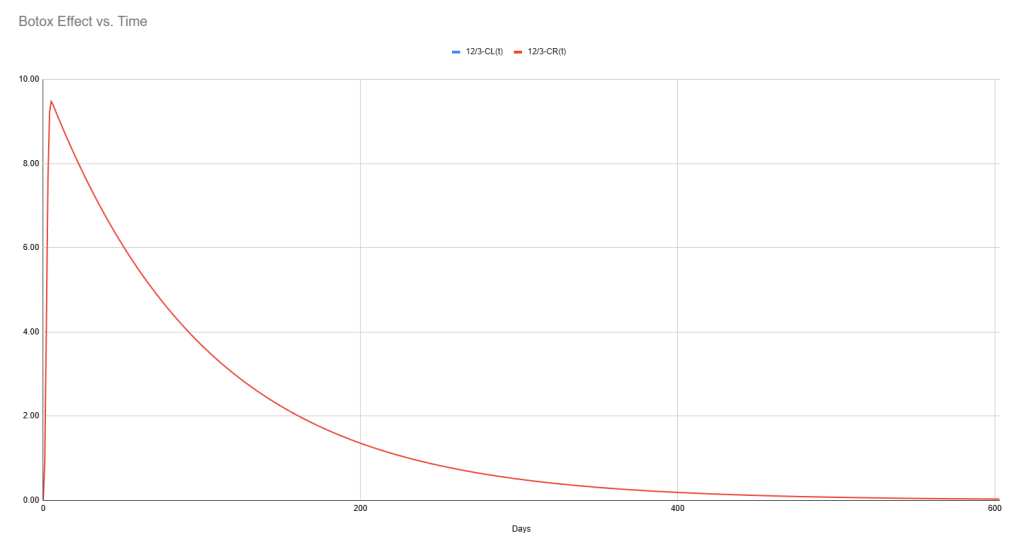 That's what's up, y'all. Catch you tomorrow for Music Mondays. Hope to see you then! |
| My Friday review goes to my favorite among my Cramp competitors. I highly recommend it. It's hilarious. Although, for the record, I read all of them, and there's honestly not a bad one in the bunch. Fierce competition today. Also, I learned from John  's story (which prompted a bit of Google research) that it's Lunar New Year's Eve today, kicking off the Chinese New Year. 2026 is the Year of the Horse. Happy New Year, if you celebrate. 's story (which prompted a bit of Google research) that it's Lunar New Year's Eve today, kicking off the Chinese New Year. 2026 is the Year of the Horse. Happy New Year, if you celebrate.   Here is my Review of "The Great Noodle Rebellion - 523 Words"  |
| I've been posting everywhere but my blog, so in case you missed any of it, here's what you missed. A nerdy pre-appointment analysis for my doctor, including math, spreadsheets and graphs: "Note: And they said I'd never use my biomedic..." A formal complaint about my inability to maintain a schedule: "Schedules" My completed Week 2 assignment for 26 Paychecks: "Task 2: Stalled!" A short story for The Writer's Cramp and The Bradbury, which is also a background story for my stalled novel: "The Adoption" Pardon me while I frantically throw on some clean clothes and head out so I can hopefully make it in time for Storm Machine  's lesson! 's lesson!  It's been a busy one. |
I left Tuesdays off the blog schedule and had no intention of blogging today. Then the universe decided to throw me a day worth documenting. However, fair warning that this is literally a bullet-point list of my day and probably less interesting than yesterday's technical music theory analysis.  Yesterday, I went to get labs drawn and had a virtual endocrinologist appointment, then kicked off a full day of chaos at the music school. Three of seven private teachers were absent, including two last-minute sick call-outs. I spent an unbudgeted hour or more after my appointment contacting possible subs, shuffling students around to other teachers and brainstorming possible coverage solutions until receptionists arrived to take over. The plumber never showed to look at the school's hot water tank, so I set up the (collapsible) ladder for nothing, and we had to take it down when the children began to arrive at 3:00. My own students were scheduled to start at 3:40, and I wasn't about to miss my first "Music Mondays" post, so I wolfed down a granola bar and some chips from the snack area and frantically cranked out the post. At 3:20*, I conducted a very short-notice certification for a teacher I recently hired, so he would be qualified to sub for some of the kids. (*Since my blog post is time-stamped 3:22, I must have started late.) I finished the certification with about five minutes to spare (potty time) before my first student arrived. I taught three hours of back-to-back lessons, including four students from the absent teachers. Luckily - or maybe by design? - I require lesson planning from absent teachers and regular progress documentation from everyone, so the lessons went fine. Finished teaching and documentation at 7:40, and for the first time since they arrived at 1pm, walked up to the reception desk to make sure the receptionists were okay and thank them for scrambling. At 8:00 I had a second interview with a theory teacher candidate via Zoom. That took maybe half an hour. Then I put together an offer package and emailed it to the candidate before finally heading home. THE END |
| The Internet - and Writing-com - are abundant with music-inspired writing. That makes me happy. But the majority of these creations were inspired by lyrics, not the actual music. I invite you to consider letting the sounds of the music itself inspire you. I could write an entire book on the various ways we can compose and arrange musical instrumentation to represent life and emotions. But it's a busy day, so I'll start with the basics, and we'll call this Chapter 1. Here are some ways music can shape the images we see in our minds and the emotions we feel. This list is only a subset. Key In the simplest example of this, major keys sound happy, while minor keys sound sad or creepy. Instrument Choice Trumpets are used for fanfare; for example: the king/queen's entrance, the hero's return. Instrumentation Solo violin or cello can feel deeply emotional, sorrowful, vulnerable - but collect a whole orchestra full of violins and cellos, and suddenly, they can sound confident, triumphant. Articulations A fermata (holding a note longer than a listener expects) creates tension, the anticipation of something coming. A legato melody (with notes that are smoothly connected and flowing) could evoke a river or gentle breeze. A staccato passage (short, bouncy, separated notes) might sound like a playful pet, or bring on a feeling of anxiety. Combining Strategies Composers can hone in on a particular feeling or image by mixing and matching the elements above and the ones not listed. For example, if I played staccato notes very slowly, I might evoke the image of water droplets falling. A steady, repeated note might sound like a dripping faucet, while a collection of different notes with an inconsistent rhythm might sound like water in a cave, dripping from stalagtites into a still pool beneath. Check out these two examples of musical symbolism in the song "Airplane" by the Indigo Girls. Both passages evoke an image of an airplane taking off - the first with vocals (because your voice is an instrument, too) and then with the piano. NOTE: Listen to both videos, but only a few seconds. They each start in a different spot in the video. I forgot that the time attribute on a YouTube embed doesn't work on WDC. Sorry! Here are the times for the two examples: Vocals Ascending at 1:27 Piano Ascending at 2:10 Your homework Listen closely to the instrumentation in your favorite music, and see if you can identify parts of the song - the music, not the lyrics - that remind you of something. Even if you don't have the vocabulary to explain it, I invite you to post a video in the comments and give us the min:sec, so we can hear it, too. Musically, Michelle |
| I updated the contents of the Biography tab of my Portfolio and the introduction to this blog today. Work: At the music school, we wrapped up 2025 versions of all our logs, schedules, checklists, etc. and prepped 2026 versions. We closed the books for December and for 2025. 2025 was a terrible year for the school's profits. Reasons: - Our 7-year-old A/C died, and HVAC systems have doubled in price since we installed the last one in 2018. - Our money guru had a stroke and some mini-strokes last year. She was out a lot, but also, she made some key mistakes and/or failed to catch some of my mistakes that she ordinarily would have caught through routine processes and procedures. It was unlike her, and since neither she nor I knew what was happening to her brain before the big stroke, neither of us thought to question anything. I accidentally left some social media ads for time-bound events way beyond the event dates, and she saw the charges but didn't ask me if I was overspending on purpose. I overspent my January ads budget by triple the budget amount! Then it happened again in the spring. - I paid a good-for-nothing digital marketing company (handling Google Ads) way too much for way too long, and I'm pissed at myself over it. I would have never hired them in the first place - the rep gave me a used-car-salesman vibe, and I have a very low tolerance for that vibe. But this company bought out my former company (I LOVED them), so I didn't see it as hiring a new company. But it really was. And they sucked. And since I've had a bad PD (Parkinson's Disease) year, I was so tired most of the year that I struggled to keep up. The point of a third party marketing company is to take the monitoring requirement off my plate. I finally fired them in November. - A scammer posing as an employee sent an email requesting a change to her direct deposit bank account. I fired it off to the money guru without looking closely, so I didn't notice that it wasn't the employee's typical email address, nor the minor errors in the email that she would never make. The money guru didn't notice, either, and proceeded to collect the new bank account information, over email, and process the account change without a physical signature or verbal discussion. She later said she wondered about some of the employee's weird questions (like when she gets paid - an employee since 2010). Soooo... the scammer walked away with the paycheck, and we had to pay the employee's paycheck again. - I was unhappy with the way our former payroll processing company handled the scam situation, so I switched to a local HR company. They're actually cheaper, monthly, and they do more - they withhold, file and submit all the local municipality taxes*. However, we had a one-time onboarding cost with the new company, and we had to adjust our tax payment timing permanently to an earlier date (a cash flow thing that required an influx of cash that we won't see back until the day we close our doors forever.) *Other states collect state taxes and distribute to the municipalities, but in Ohio, towns collects their own revenue directly, so Ohioans file federal, state, and local returns. Accountants hate Ohio! In a small business, we have to send filings and withholding to Every. Single. Town. where any of our employees live, plus the town where the business is located. Twice (in 16 years) we've made filing errors or missed a deadline where the fine was higher than the withholding - example, we paid a fine of $150 for a late $11 withholding payment for an employee living in the tiny town of Johnstown, Ohio. Health: For the last year or more, I've struggled with energy due to Parkinson's symptoms and three conflicting drugs: two stimulants (for ADHD and Parkinson's) and a sleep aid. It's a constant balancing act trying to get enough sleep despite the stimulants, without overdoing it on the sleep aid and feeling sleepy all day. I'd talk more about that today, but I'm too tired. So I'll save that for another Sunday. Suffice to say, my energy level is not helping me keep up.I've talked about myself enough for one day. On a related note, "Self Sundays" sounds so stupid. I'm taking renaming suggestions based on the description in my blog intro and/or the dribble I fed you today. Whatever. I met my goal and then some. But Music Monday tomorrow will probably be more interesting.  |
| I changed my mind. (I'm allowed.) "Funny Fridays" have been canceled until further notice (No jokes for YOU!) Two reasons: (1) My style of comedy is mostly improvisation, repartee, that sort of thing. I'm not even sure I can be funny on command (unless you're offering cake as a treat), and (2) I decided I wanted to carve time out for reviewing, and something had to go. Friday Reviews: ...will happen, as implied, every Friday (unless I'm sick or dead, like yesterday.) If you would like your work added to my queue, drop it in the comments, and I'll check the list next Friday. That's not a promise that your piece will be chosen for review if the list is long. I'm only committing to one review every Friday, because my reviews almost always take about an hour. Sometimes, time permitting, I might review more than one work, but if I overpromise, I'm more likely to bail on the whole thing altogether. Today, Friday, January 9th, I have reviewed two pieces for my Friday Reviews:: Review of "Angel Feathers" Review of "The Calling" Happy Friday, everyone. |
| It's "The Bradbury" Thursday, so I owe you/myself/somebody a short story. On literally Day 2 of my new blogging schedule, and I slept off and on all day on the couch. The COVID and/or flu shot(s) I received yesterday were not well-received by my underprepared body. Therefore, my goal of blogging before lunch was not met. However, you all didn't know about my self-imposed daily deadline until just now, and it's still Thursday, so here we are. And with that, I give you: "The Battle of Two Vaccines" Enjoy. |
| Robert Waltz 's blog post today inspired me to employ the scientific method to the following hypothesis. Hypothesis: I suck at routine tasks. Evidence: "Note: Huh. I accidentally earned the animation today...." Conclusion: Sometimes I accidentally meet all my goals, but "sometimes" =/= "routine", therefore, I do indeed suck at routine tasks. Disclaimer: That wasn't actually the scientific method, since my "evidence" was anecdotal and a single data point does not a trend make. I could collect more data, but I could also be writing instead. Which brings me to the point of today's discussion. Blogging Goal Ahead... I'd like to blog more consistently. So I spent a bunch of time procrastinating when I could have just been blogging devising a structured weekly routine that I'm absolutely going to fail at. In fact, if you're interested in placing bets on how long I can keep up with the schedule, the window is over there.  The odds are ever in your favor. But today is "Writing Wednesday," so I'm writing about my weekly writing plan, which totally counts, even if it's more about logistics than actual writing today. Weekly Writing Schedule Plan Approximation: "Self" Sundays - blogging about myself and tracking health-related trends "Music" Mondays - blogging about music / music education "Writing" Wednesdays - blogging about the art (/logistics) of writing "The Bradbury" Thursdays - writing a weekly short story "Funny" Fridays - ? All I know is you'll laugh your asses off (or I will) Tuesdays and Saturdays are dedicated to non-writing tasks (aka, my real job, lol.) Did you notice the clever alliteration? Did you? Did you? For once, the "The" in a title gets its due recognition. On a related note, we need some more variety in the starting letters of weekdays. Too many S's and T's, if you ask me.There. I blogged about writing. Let the wagers commence. |
| I'm not a fan of resolutions. I understand why people make them: Goals are hard. They're hard to define and even harder to keep. And they're usually things we should be doing anyway, like making healthy choices, strengthening relationships, and completing tasks that either align with our passions or are required for basic survival. So we find a boost in the new year. Yet failure to keep resolutions beyond January is so likely that it's cliche. Why is it so hard to do the things that are good and necessary for us? The answer is obvious: it's because the difficult, unpleasant short-term action (break a sweat, apologize, get out of bed and go to work) is staring you in the face, while the long-term benefits are out-of-sight, out-of-mind. There's a passage I read in a flavor-of-the-month book during my Corporate America days - maybe The 7 Habits of Highly Effective People by Stephen Covey? - that talks about integrity in the moment of choice. When faced with the choice to get on the treadmill or not, that's the moment when you decide whether you're truly invested in your goal. Many people who make resolutions successfully make decisions that comply with their own values in the moment of choice for a period of time. For reasons psychology experts probably understand much better than I, there's something about that date - January 1st - a new year - that provides the boost they need to make the right decision in that moment. I suspect there may be a community element, too - when everyone else is doing it, it's easier. But then one of your friends fizzles. Then another. And it gets harder. If all it takes to make the right decisions in the moment of choice is a concept of newness and a little peer pressure, does that mean that, during the rest of the year, we're just barely on the reverse side of that equation? That we could achieve our goals if only we had a little boost? Everyone is different. I realize that. I'm not trying to be judgy. Most people do a good enough job of judging themselves without my help. This discussion is prompted by introspection. What could I do to boost my own decision-making integrity when faced with those individual, seemingly insignificant choices that accumulate and make or break my endgame? So, I'm not a fan of resolutions. But I like goals, and I really like meeting them. I'm very good at setting goals - clearly defined, attainable goals - but not always as good at meeting them. My moment-of-choice integrity is often lacking. I can justify any decision in that moment: "I know I said I was going to stop eating cake, but I decided I don't actually need to live to 100 after all, because honestly, eating cake is probably better than being 100 anyway." What I need is some peer pressure, people! If you ever want someone to trade accountability with, I'm your girl. |
| I asked Google Gemini: Are there any gadgets, tools or toys popular now that might be a more currently relevant metaphor than diving into a pool full of thumbtacks or razor blades Here are the suggestions. They're so delightful that I just had to share. Feel free to use them (see previous post "Can I Copyright My Work If I Use AI?" for more info.) Diving into a pool of spam bots. Hitting the 'Like' button on every cringe post from 2012. Having your AirPods die right when the bass drops. Swiping through your entire camera roll in reverse. Stepping on a floor covered in Clickeez/Magna-Tiles. Doing a collab with a rogue Furby. Trying to solve a Rubik's Cube after someone switched the stickers. Diving into a pool of spam bots. Hitting the 'Like' button on every cringe post from 2012. Having your AirPods die right when the bass drops. Swiping through your entire camera roll in reverse. Stepping on a floor covered in Clickeez/Magna-Tiles. Doing a collab with a rogue Furby. Trying to solve a Rubik's Cube after someone switched the stickers.I'm eagerly anticipating your 2025 "pool of tacks" updates. |
"This second Part of the Copyright Office’s Report on Copyright and Artificial Intelligence (“AI”) addresses the copyrightability of outputs generated by AI systems. It analyzes the type and level of human contribution sufficient to bring these outputs within the scope of copyright protection in the United States." - United States Copyright Office* *full document linked at the bottom I've been using ChatGPT and Google Gemini during the creation of my November novel this year. Examples of my prompts just within the last 24 hours include: - Can you please propose a gen z / alpha way to say flip or flip out - How about a Gen z / alpha way to say, that was uncool of her - how about "preach" or "you're preaching to the choir" - Does this sentence make sense: It jives with your natural affinity for animals. - Do Gen z / alpha still use text abbreviations like y instead of why and u instead of you (is my Gen X showing yet??) The last two don't worry me at all, because the bot is answering a question, not offering text that I might incorporate into my book. But what about the first three? Are they perfectly fine, toeing the line, or are they clean over it? For example, if I asked Gemini: Can you recommend a gen z / alpha way to say "I really blew it" And Gemini responds:Click to see full response ▶︎ Recommendation: The most common and effective phrases that capture "I really blew it" are: "I took a massive L." (Concise and definitive.) "I just fumbled that so hard." (Implies responsibility and a critical mistake.) Does it render my work uncopyrightable if I use the exact phrase "I just fumbled that so hard" in my finished work? What if I just used the word "fumbled"? I wanted to know, so I looked it up at the US Copyright Office website. Full disclosure: I skimmed the document to find relevant passages, so it's possible I missed something. However, my takeaway was that questions like this would be handled by courts on a case-by-case basis, and overall, the court will likely side in favor of the author. I based my finding on this passage: “To be sure,” the Court further explained, “the requisite level of creativity is extremely low; even a slight amount will suffice. The vast majority of works make the grade quite easily, as they possess some creative spark, ‘no matter how crude, humble or obvious’ it might be.” Copyright and Artificial Intelligence Part 2 - Copyrightability Report Literarily, Michelle |
| Mostly, I just wanted this title as a callback to my previous blog post, but I guess it could foreshadow the plot of my current novel project. If you're worried about spoilers, you could plug your ears and shout, "La, la, laaaaaaaa!" while you read this post. But the truth is, I don't even know what all is going to happen in this novel (see my Notebook for all the havoc my characters are causing), so I can't possibly be revealing too much, here. If I do, I'll be as surprised as you, not to mention, after having the ending ruined for myself, I might quit the project altogether out of sheer boredom. I do wish there were a more efficient, less tedious way to pluck these ideas out of my head and get them in print. Sprinting via the "Sprint Writers Competition" helps, but it also caused all of my unruly characters, and, inexplicably (j/k, it's entirely explicable: I'm typing faster than my brain can think), seems to reduce my vocabulary back to a toddler lever. Okay, maybe Kindergarten. I may have written [find a better phrase] or [OMG THIS SUCKS WHY AM I WRITING SO MUCH EXPOSITION] more than actual narrative and dialog.But from a technical, structural perspective, I'm playing with unreliable narrators this year. It's definitely an experiment, because I have six - (points of view? perspectives? I've thought I had those straight for decades, but even Google can't agree with itself anymore, so now I'm questioning everything I ever thought I knew) - six characters whose heads my narrator is in (recounting in 3rd person) during various scenes throughout the story. And they're all unreliable. It's like Gone Girl on steroids: You never know whose truth is the unequivocal, impartial truth. It's slowing down my word count, but it's fun crafting scenes such that I switch to another character's viewpoint just before possibly revealing something definitive to the reader. Must... leave... them... hanging!!! Have you ever tried something like this? Do you think it's possible to pull off that many unreliable narrators? I guess I'm not giving anything away, after all.  |
| I just stumbled across my 2018 "Dear Me" letter, and this jumped out at me: "Every year, you pledge to do better, to do more, to be more efficient, to stop wasting time, to complete more tasks on the never-ending list. Every year, you find yourself more and more exhausted." Hindsight is 20/20 (although my vision isn't and wasn't; I started needing readers 3 years earlier when I turned 40 in 2015.) Here's what I know now, that I didn't know then: I had Parkinson's Disease. My first symptoms appeared in 2015, and I was (mis)diagnosed with Essential Tremor later in 2018. It wasn't until March of 2022 that I finally got the correct diagnosis (PD) and the miracle medication (carbidopa/levodopa) that gave me my functionality and my give-a-shit back. I've always been an overachiever. I think I may also be a closet people-pleaser, which you can see in the letter. I think we're all people-pleasers of one type or another. Even narcissists and sociopaths need to convince other people to validate them, whether that's through adoration, vilification or or just to get others doing things for them (see also: minions). I needed to see this letter today. I started revisiting the database project in 2024, and the website project earlier this year in 2025, and it's been weighing me down that I can't finish either one. This letter reminds me that, it doesn't matter. And I'm doing much better on the things that do matter. My relationships have improved dramatically since 2018. So, Go Me? But also, more importantly, don't be so hard on yourself. You don't have to please everybody; only the people that matter. And if you're exhausted, listen to your body. You may not have PD, but exhaustion means you need to slow down. "The "Dear Me" Letter" |
| Amantadine is a fun medication. In theory, it's supposed to help prevent my toes from curling under and my ankle from twisting. In reality it causes the weirdest, most vivid dreams and hallucinations. Last night, I dreamed I was part of a research team living and working on the moon. The procedures to keep the habitat livable were strictly enforced, but we had a new kid who kept messing up. Every time he did something to compromise the air seal (which was not very elaborate - like, duct tape holding down tent flaps or something), we had a near miss. I told him over and over that one of these days, the vacuum of space was going to suck him out. Luck was on his side, though. (And the rest of the team's, lol.) Sci fi story plot, anyone? |
#scopecreepersanonymous I asked ChatGPT and Gemini to review a short story I wrote. The feedback I got from both on various revisions pretty much defines me as a writer: Gemini said: This is a fantastic opening.This revision elevates the story from a good setup to a very compelling narrative fragment.ChatGPT said: This is a polished and highly effective opening to a series or novel.You should feel very confident in this draft. Are you planning to continue this story or move on to a different project?ChatGPT did redeem itself a little with this one: If you plan to submit or expand this into a series, this could serve as Chapter One or a standalone “origin” story. But in general, this is the story of my writing life. Everything I write is just a chapter of something bigger. Scope creep. It's no wonder I never finish anything. |
 View Portfolio
 Visit Notebook
 Send Gift Points
 Awards
 Badges
 Send Email


 Community Newsfeed
 Puzzle Hub
 General Discussion
 Sponsored Items
 Book of Trinkets
 Static Items
 Books
Books Groups
 Interactive Stories
 Audio
Audio Campfire Creatives
 Community Notes
 Crossword Puzzles
 Documents
 Folders
 Images
 In & Outs
 Madlibs
 Photo Albums
 Polls
Polls Product Reviews
 Quizzes
 Survey Forms
 Web Pages
 Word Searches





 it's now on the list!


