%%USERNAME%%    %%ACCWORDS%% %%ONOFF%% |

Whispers, warmth, and the things that could make life glow. |
|
Welcome to My Private Whispers and Light Blog Some places we create just for breathing — quiet corners where our thoughts settle, our hearts speak, and the small, bright things in life finally get a voice. This is mine. Here, I’m gathering the pieces that make my world feel warm and whole: • the love of my life and my family • art in every color and every form • photos, quotes, and little scribbles that catch me at the soul • Bible verses that steady me • daydreams, hopes, and the questions that keep me curious • wolves, birds, cats, and the creatures I’ve loved since childhood • podcasts I adore, memes that make me wheeze • and the writing that threads it all together ✍🏻 I’ve carried these whispers for a long time — tucked into journals, hidden in drafts, scattered across platforms. Now they finally have a home. If you’ve wandered in, welcome. Maybe you came for a poem, a thought, a spark… or maybe curiosity just nudged you here. Whatever the reason, I’m glad you stopped for a moment. I hope something in this little corner lifts you, warms you, or at least makes you smile. And if not… well, at least you’ll get to wonder why on earth you’re reading this jumble of thoughts and ideas. 🤣 Either way, the door’s open. Let’s see where the light leads. Always kind wishes, Tee |
| Revisiting - PJ Party and The Ghost and Mr. Chicken I was reminded recently how easy it is to forget that some of the films we associate most strongly with television actually began their lives on the big screen. The Ghost and Mr. Chicken was released in theaters across the United States on January 20, 1966. It was a full theatrical release from Universal Pictures, not a made-for-TV movie, and it arrived at a time when studios still trusted character-driven comedies to bring people into theaters. For many viewers, this film first appeared on a television screen. I was lucky enough to see it in a theater when I was eleven, and the magic has never faded. I loved it then, and I still love it now. There were twelve of us, all eleven years old, lined up across the theater, holding hands during the scary parts. That same night was my very first pajama party. After we got back from the movie, we were still buzzing with excitement, and because we were celebrating Joan’s birthday, her mom taught us all how to crochet. That night sparked my lifelong love of crocheting and weaving, a memory forever tangled up with that movie. At the time, I didn’t know anything about studio strategies or box-office success. I only knew how the film made me feel. The Simmons mansion was genuinely spooky, the organ scene unforgettable, and Luther Heggs oddly comforting. Even as a child, I sensed that this was a story about fear, yes, but also about decency and quiet courage. Looking back now, it’s clear that Universal knew exactly what they were doing. The film arrived during Don Knotts’s peak period after leaving The Andy Griffith Show, when he was proving he could carry a movie on his own. He had already shown his range, but this role refined what he did best. Luther Heggs is nervous and self-doubting, but he’s also principled. He doesn’t become brave because fear disappears. He becomes brave because the truth matters more than his fear. That distinction is what gives the performance its staying power. It isn’t loud heroism. It’s human. Exact box-office numbers from the mid-1960s are hard to pin down, but Universal clearly considered the film a success. You can see it in what followed: more starring roles for Knotts and growing confidence in that gentle “comedy with a spooky edge” formula. In studio terms, the movie did exactly what it was meant to do. What fascinates me most is how its legacy unfolded. For many people, this became a television favorite, often resurfacing around Halloween. It was spooky without being cruel, funny without being mean, and safe in a way that invited repeat viewing. That long television life is why it feels so deeply nostalgic to so many of us. Time has been kind to The Ghost and Mr. Chicken. Modern audiences often appreciate it more than critics did at the time. Its pacing, restraint, and warmth stand out in an era that sometimes mistakes volume for substance. This film trusts its audience. It always did. Today, whether seen on Blu-ray, streaming, or remembered from a childhood matinee, it still works because it understands something fundamental: courage doesn’t always roar. Sometimes it trembles, takes a breath, and steps forward anyway. Some films fade into history. Others quietly stay with us. This one never left. The image is totally AI generated. I wanted to have something to illustrate this story so I asked an AI program to make an image of a spooky old organ. 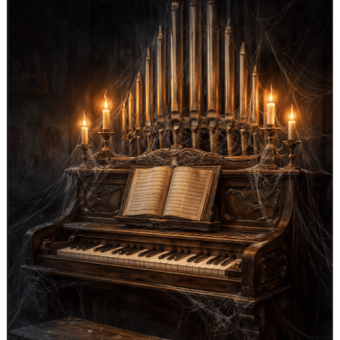 |
 View Portfolio
 Visit Notebook
 Send Gift Points
 Awards
 Badges
 Send Email


 Community Newsfeed
 Puzzle Hub
 General Discussion
 Sponsored Items
 Book of Trinkets
 Static Items
 Books
Books Groups
 Interactive Stories
 Audio
Audio Campfire Creatives
 Community Notes
 Crossword Puzzles
 Documents
 Folders
 Images
 In & Outs
 Madlibs
 Photo Albums
 Polls
Polls Product Reviews
 Quizzes
 Survey Forms
 Web Pages
 Word Searches


